
Questions Catholics Ask

| ➕ | ➕

More questions...and responses

RSS feed button

Consecrated Life Posts

Ask a question now!

What are the differences between Franciscan communities?

Posted by: Patrice Tuohy   🕔 Friday 01, May 2026 Categories: Church History,Consecrated Life,Clergy
St. Francis and St. Clare
Saint Franics and Saint Clare

The Franciscans, one of the four great mendicant orders of the church, have a long history, beginning with the lives of Saint Francis of Assisi (d. 1226) and Saint Clare of Assisi (d. 1253). Over the years many Franciscan religious communities have emerged within Catholicism and beyond. In addition many people have incorporated the spirit and values of Franciscan spirituality into their own ways of life. While there’s no way to cover all aspects of the Franciscan Family, we can make some general distinctions.

The main categories of Franciscans are the three Franciscan orders:

The first order is the Order of Friars Minor which is comprised of the Observants, Conventuals, and tCapuchins. The Observants (O.F.M.) and the Conventuals (O.F.M. Conv.) were the Franciscans of Francis’s day and later to this day. The Observants were friars who typically lived in hermitages tucked into the mountains. They went through several reforms and a series of splits with the last major consolidation and restructuring initiated by Pope Leo in 1897. Conventuals were friars who felt called to follow Francis by serving people in urban areas. These friars ministered and lived together in houses (or “convents”) among the people. The Capuchins (O.F.M. Cap.) were a reform of Franciscanism in the 16th century spearheaded by Friar Matteo da Bascio who felt called to go back to a more rigorous way of Franciscan life that he saw in Saint Francis.

The second order of Franciscans are the Poor Clare nuns, communities of contemplative women founded by or in the spirit of Saint Clare of Assisi along with her good friend Francis. The O.S.C. Poor Clares follow the rule approved by Pope Urban in 1263 that allowed convents to own property and live a less severe vow of poverty. The P.C.C., or Colettine, Poor Clares follow a stricter rule of poverty, fasting, and silence instituted by St. Colette in 14`0.

The third order of Franciscans is diverse, comprising religious Franciscans (Third Order Regular), who profess public vows and live in community, and lay Franciscans (Secular Franciscan Order), single and married men and women who live a Franciscan lifestyle in their own situations and lives.

Within the above orders, you will find even more diversity of customs and traditions unique to each individual Franciscan community.

So what’s a person to do if they are attracted to the Franciscan way of life? The best advice is to get out there and explore different communities, meet friars, sisters, or nuns, and allow yourself to envision your life with them. Can you see yourself in their shoes or sandals? Also read and experience more of the lives of Francis and Clare and other Franciscan saints and holy people. In their stories you will find pieces of your own which will help you to discern and know which Franciscan community feels most at home to you.

—Adapted from a Questions Catholics Ask by Sr. Julie Vieira, I.H.M.,
courtesy of Prepare the Word, published by TrueQuest Communications


Websites:


Why is being celibate important in consectrated life?

Posted by: Patrice Tuohy   🕔 Wednesday 11, March 2026 Categories: Doctrines & Beliefs,Consecrated Life,Church History
heart with cross and rays
Celibacy: A focused heart

Celibacy was a radical idea from the moment it first appeared in our religious tradition. The setting was the 6th-century B.C. The prophet Jeremiah and his community were facing the devastating exile to Babylon, which included the loss of home, city, king, and Temple. In the midst of total upheaval, God asked Jeremiah not to marry or have children. That was a prophetic sign that the world as Israel knew it had no future. In a culture that valued the posterity of heirs so highly, Jeremiah’s celibacy was an outrageous choice.

The radical sign of celibacy, what the church calls the memento mori in Latin ("reminder of death”) remains central to the practice of celibacy in religious life today. The affairs of this world are passing, while the realities of the reign of God are everlasting. The celibate lifestyle is a walking testimony to this belief eschewing vain pursuits and focusing on deeper truths. Jesus taught that when he told the disciples, “Some . . . have renounced marriage for the sake of the kingdom of heaven. Whoever can accept this ought to accept it” (Matthew 19:12). The church points to the example of both Jesus and his Virgin Mother as eloquent witnesses to the single-minded dedication to God’s reign that is possible without other primary commitments.

Saint Paul also extolled celibacy (his own life is Exhibit A in his argument) but did not mandate it. Paul believed that, all things being equal, the virgin and the celibate were free from preoccupation with family matters and can therefore be more attentive to the Lord, especially because he thought the end of the world was near. Theologians rush to add that all things are frequently not equal: a married person may certainly be more attentive to God than a given celibate.

What is clear from these discussions is that the point of celibacy is not refraining from sexual activity (the typical secular assumption) but simplifying and clarifying one’s life for single-hearted service. Celibacy remains a radical incarnation of Christian freedom to move as God wills.

—By Alice Camille
(adapted from a previously published answer)

Scripture
Jeremiah 16:1-2; Matthew 19:10-12; 1 Corinthians 7:1-40

What resources does VISION have for World Day of Prayer for Vocations?

Posted by: VISION Vocation Guide   🕔 Thursday 29, January 2026 Categories: Consecrated Life,Vocation and Discernment,Prayer and Spirituality
VISION Vocations resources
VISION offers many printed and downloadable resources along with all of its online content and features

VISION Vocation Network and its parent organization, the National Religious Vocation Conference, offer many great resources both for individuals discerning a vocation or for vocation promoters in parishes, schools, and campus ministry offices. We encourage you to take time to get familiar with the many features on our websites. 

Here are just a few quick links to get you started.

IN PRINT

The Annual VISION Religious Vocation Discernment Guide: Order here. Or read the digital edition.

Annual Prayer Card Bookmarks. Posters. Order here.


ONLINE

Articles on Prayer and Discernment and Religious Life

Spirituality Quiz

Celibacy Quiz

Vocation Match

Community Search

Vocations Basics handout | In Spanish | In French 

Vocation Prayers

Ways to Pray handout

Religious Life Timeline

Bold and Faithful: Meet Today's Religious storymap

NRVC store for additional vocation resources for vocation ministers

What difference does it make that the current Pope is a Jesuit?

Posted by: Alice L. Camille   🕔 Tuesday 26, September 2023 Categories: Consecrated Life,Church History
Just as Jesuits take seriously the living Christ, they also passionately hold that God is engaged with the world and it's our responsibility to be coworkers and not obstacles to divine movement.

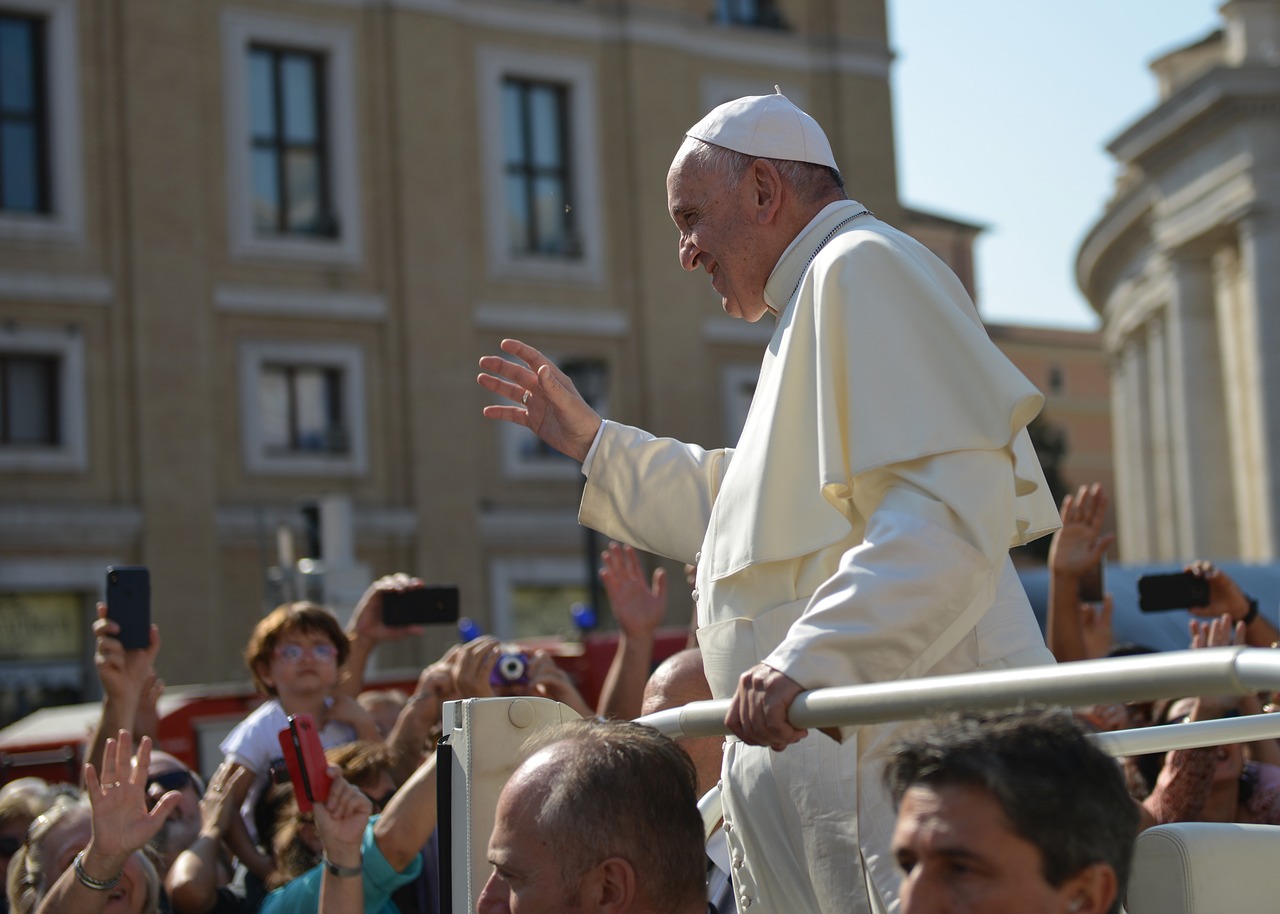
Of 266 popes so far, about 34 have belonged to religious orders. The exact count varies, but the most frequent pope-supplying order are the Benedictines (17), followed by Augustinians (six), and Dominicans and Franciscans (four each). The Cistercians supplied two. Pope Francis is the first Jesuit, and the first non-European pope in nearly 1,300 years. That latter fact is at least as influential on the direction of his papacy as his Jesuit-ness.

But certainly being a Jesuit affects how Francis thinks and prioritizes for the Church. According to Jesuit writer Frank Houdek, Jesuit spirituality—as presented in the Constitutions of their Society and particularly in the Spiritual Exercises of their founder Saint Ignatius—is based on six essential elements. The first is that their identity is in Christ—which you can probably guess from their official name, the Society of Jesus. This Christocentrism isn't merely dogmatic but involves fostering a personal bond with the living Christ. The second component of Jesuit life is recognizing oneself as a collaborator with the activity of God. Just as Jesuits take seriously the living Christ, they also passionately hold that God is engaged with the world and it's our responsibility to be coworkers and not obstacles to divine movement.

The third Jesuit conviction is a keen emphasis on spiritual discernment rather than pragmatic decision-making. Divine patterns and rhythms are discernible in our personal and communal life and we can develop a sense of where God is leading if we are attentive. Magnanimity of spirit is next, and it's a word we non-Jesuits may not use often. The magnanimous heart is generous, courageous, and heroic in its efforts. The good Jesuit envisions himself as a superhero for God's intentions, and maybe that's why we read so many hagiographies of Jesuit martyrs. Perhaps Pope Francis felt that tug of heroism when he accepted his election to the papacy.

The fifth element of Jesuit life is fraternity, but that sounds like what any religious community is about, doesn't it? Yes, but Jesuits imagine themselves as "friends in the Lord" and friends OF the Lord: that is, in the company of Jesus together. Perhaps the best-known Jesuit theme is the last: "finding God in all things." Prayer and service, affect and intellect, all are integrated into the Jesuit mission. Listen to the Pope's teachings, and see how many of these ideas you hear echoed in his words.

Scriptures: 1 Samuel 3:1-19; Psalms 19; 61; 71; 90; 121; 130; 139; Song of Songs 8:6-7: Isaiah 45:4; Jeremiah 29:11-14; Mark 1:16-20; Matthew 28:16-20; Luke 4:14-21; 18:18-30; 24:13-35; John 15:11-17; 21:1-18; 2 Corinthians 5:14-15; Galatians 2:19-20; Ephesians 2:10; 5:1-2 

Books: Guided By the Spirit: A Jesuit Perspective on Spiritual Direction, by Frank J. Houdek, S.J. (Loyola Press, 1996)

Hearts on Fire: Praying with Jesuits, edited by Michael Harter, S.J. (Loyola Press, 2005)

What's a tertiary?

Posted by: Alice L. Camille   🕔 Sunday 18, December 2022 Categories: Consecrated Life,Vocation and Discernment,Prayer and Spirituality
Tertiaries get the nod of approval precisely because of their deep connection to long-established communities with full canonical oversight.

My older sister is a Third Order Carmelite. She's also married, a mother of four children, and a pharmacist. Obviously she's not a nun or religious sister, but if not, then what is she?

Many of us learn from friends that they've joined third orders or otherwise describe themselves as tertiaries. Franciscans, Dominicans, Benedictines, Carmelites, and other religious communities extend their identity to lay people in a "third way" that doesn't include clerical status nor communal living in a religious house. The tertiary designation is a secular association that even has official recognition in canon law: "Third Orders - Associations whose members lead an apostolic life and strive for Christian perfection while living in the world and who share the spirit of some religious institute under the higher direction of that same institute are called third orders or some other appropriate name." (CCC #303)

Third orders aren't the only kind of lay associations mentioned in church law. The earlier Code of Canon Law from 1917 recognized lay confraternities (like the Confraternity of Christian Doctrine) and pious unions (think St. Vincent de Paul Society, Knights of Columbus) (see old CIC #700). The distinction between confraternities and pious unions isn't about purpose so much as ecclesial establishment and oversight. Current canon law only formally recognizes tertiary groups while noting the right of other private and public lay associations to form. Needless to say, not every group formed by a Catholic can utilize the name Catholic without competent ecclesial authority. (Heaven knows how the "brand" might be extended otherwise.)

Tertiaries get the nod of approval precisely because of their deep connection to long-established communities with full canonical oversight. The traditional "first orders" were male religious, not necessarily ordained. "Second orders" were composed of women religious. Any layperson who chose to share in the spirit of these communities without taking vows were called oblates by the Benedictines, and third orders by Francis of Assisi.

Today, tertiaries are divided into two categories: secular third orders and regular members. Seculars are like my sister, who lives a relatively normal life while participating in the prayer life and values of her chosen affiliation. She wears a scapular to remind her of her promises, and when she dies, she may choose to be buried in the habit worn by her group. Regular third order members take simple vows as well as following the rule of their community. If a religious community feels resonant for you, inquire about the possibility of associate status.

Books: The Tertiaries Companion - A Prayer Book For the Members of the Third Order Secular of St. Francis of Assisi, by Vincent Schrempp OFM (Franciscan Herald, 2022) 

Rule of the Third Order of the Servants of Mary, Servites Third Order (Ulan Press, 2012)

Older vocations

Posted by:   🕔 Tuesday 12, January 2010 Categories: Consecrated Life,Vocation and Discernment

I am over 50 years old and feel called to religious life, but most communities do not seem to accept older candidates. What should I do?

It can be tough to respond to a calling from God when one keeps running into obstacles in pursuing that calling. It's especially important to stay close to God during this time and if possible stay connected to a spiritual director.

You are not alone in being over 50 and sensing a calling to a form of consecrated life. We regularly receive requests for information here at VISION and on aNunsLife.org and have looked for dioceses and religious communities that are open to folks over the age of 50. There are not many because of the expectation that a person be in good overall health and capable of participating fully in the mission and ministry of the lifestyle, whether ordained or religious life.

In general I have found that contemplative religious communities are more open to older candidates, and for men that may include the possibility of ordination. Vocation directors, however, are becoming more aware of the growing group of people over 50 who are called to some form of consecrated life. Although there is little precedent in our current forms, the church does have a form of life called the Order of Widows that could be renewed and revitalized for older women and men.

For you, now, I encourage you to go more deeply into God's calling to you with a spiritual director. Also, spend time with others who are sensing a similar calling..

Trust that God does in fact have something in mind for you, even if at this time you keep bumping into obstacles. I will be praying with you and will continue to keep an eye out for possibilities for you.

Communities that accept older vocations.

I'm having trouble finding a religious community that will consider me as a candidate because I'm older. Why?

Posted by: Jennifer Tomshack   🕔 Sunday 20, August 2017 Categories: Consecrated Life,Vocation and Discernment
Older discerners
Finding a religious community when you're older is not impossible.
Many communities don't accept older candidates; however, some will consider making exceptions. We usually advise older discerners to directly contact communities that interest them and discuss their circumstances.

There are several reasons why communities are less inclined to consider older discerners. For starters, the formation process can take as many six years, which makes candidates that much older when they finally enter.
 
Financial concerns are another reason. New members are expected to work and older candidates have fewer years to do so. There are also greater potential healthcare costs associated with aging.

But the biggest reason is that communities have found that it is harder to adjust to community life after living as a single or previously married Catholic for so many years. The transition to community life and the loss of independence at a later age is simply too difficult for many older discerners. It's also hard for religious who have spent their lives in community to adjust to new members who have had a lifetime of very different experiences.

However, finding a community when you're older is not impossible. Below are links to resources that might help you, including a list of communities that will consider older discerners.

What's an abbess, and what power does she wield?

Posted by: Alice L. Camille   🕔 Tuesday 10, March 2015 Categories: Consecrated Life,Church History
 Hildegard of Bingen
 Famous abbesses of the past include Hildegard of Bingen, a 12th-century visionary,
theologian, composer, artist, and healer.

An abbess is the female counterpart of an abbot. This title derives from abba, "father" in Aramaic and Syriac, which makes the abbess the mother of her community. Hers is an elected office over a group of twelve or more nuns in an abbey. (Abbey and monastery are interchangeable words.)  The term abbess has been used since the sixth century within the Benedictine order, though now it's generally applied among religious cloisters of women. The abbess was originally a woman of noble rank as recognized within the structures of feudal society. She had the capacity to sit on councils, and in some situations governed double monasteries of both monks and nuns.

Was she powerful? You bet. In the feudal period, an abbess wielded temporal, spiritual, and ecclesial authority that bordered on the episcopal: that is, she held a rank similar to a bishop within the borders of her cloister and associated territories, and was answerable to no authority under the pope. Today's abbesses hold a more limited authority over their communities in spiritual and temporal matters.

Famous abbesses of the past include Hildegard of Bingen, a 12th-century visionary, theologian, composer, artist, and healer. She ran into conflicts with clerical leaders and eventually moved her community to Bingen in order to govern without interference. Her power was so strong and she inspired such devotion in her nuns and priest spiritual directors that it's no wonder she filled some clergy with alarm. Her canonization was delayed for centuries, and only in 2012 did Pope Benedict XVI recognize her as a Doctor of the Church.

Teresa of Avila in the 16th century was a remarkably capable abbess who reformed the Carmelite order and encouraged John of the Cross to do the same with the monks under his charge. Teresa is another Doctor of the Church named belatedly in 1970, and at the time of her death the Spanish Inquisition was investigating her for possible heresy. Eleventh-century Abbess Heloise of the Paraclete community was considered a brilliant scholar and governor of her community. Heloise is remembered mostly for her tragic love for Peter Abelard. Finally, Scholastica, twin sister of Benedict, was co-founder of the Benedictines with her brother. While the term abbess was not used in the 5th century to describe her, Scholastica fulfilled that role admirably for her nuns. As Gregory the Great said of her: "She could do more, because she loved more."


Films: "Hildegard" (Gateway/Vision Video 1994) "Teresa de Jesús" miniseries (Televisión Espanola, 1984)

Books: The Life of Teresa of Jesus: the Autobiography of St, Teresa of Avila  - transl. E. Allison Peers (Garden City, NY: Doubleday, 1960)

The Life of the Holy Hildegard - The Monks Gottfried and Theodoric (Collegeville, MN: Liturgical Press, 1995)

SOCIALIZE

Follow Us

CALENDAR

Click on a date below to see the vocation events happening that day!