

Questions Catholics Ask

| ➕ | ➕

More questions...and responses

Why is the Lord’s Prayer so important?

Posted by: Alice L. Camille 🕔 Thursday 10, January 2013 Categories: Scripture,Prayer and Spirituality
The Lord's Prayer


PRAYER is the food of faith, as one theologian put it. Christians have sought the best way to feed their faith since the disciples first asked Jesus, “Lord, teach us to pray.” Jesus offers a lot of advice about how to pray in other places: Pray in secret and don’t call attention to it. Pray in groups especially when you need spiritual support. Pray often, pray briefly, and don’t multiply fancy words. Ask for what you need and you’ll get it. Pray when faced with bad spirits and difficult cases. Be watchful and prayerfully alert in times when fear may cause you to be weak.

Jesus also offered parables about effective prayer: Pray with humility and honesty, like the tax collector rather than the self-congratulating Pharisee. Be persistent in prayer, like the widow before the judge. Forgive your brother or sister before you offer your gift at the altar. Finally, Jesus gives his insistent friends a prayer that does all these things. Early Christians found it so useful they were urged to say it three times daily in the late 1st-century book of the teaching of the apostles known as the Didache. Today the “Our Father” is also prayed at every Mass, in the Liturgy of the Hours, in reciting the Rosary, and in many other devotions.

The early church father Tertullian called the Lord’s Prayer the perfect summary of the whole gospel. The heart of the prayer is an invitation to God to make the kingdom coming a present reality. The fulfillment of that kingdom is the end of all need, so we pray for what mortals need most: provisions, pardon, and protection. The prayer begins with “you” statements and ends with “we” petitions. That makes sense because faithful people must begin with submission to God’s will before we can anticipate its fulfillment in our present needs. God’s will first; then ours.

The petitions don’t imply that God has to be informed of what we need. Rather they express our confidence that God will address our needs. Jesus instructs us to begin our prayer intimately, calling on God with the familiarity of a child. Knowing the Holy Name of God presumes intimacy: In the ancient world, such knowledge gave you a certain inside track in a relationship. Invoking the kingdom to be realized “on earth as it is in heaven” brings the will of God directly into human experience. Everything about this prayer invites God to bring this world ever more closely in line with the new creation promised in Jesus.

Scripture
• Matthew 5:44; 6:9-13, 33; 7:7; Mark 9:29; 14:32-38; Luke 11:1-13; 18:1-14; John 12:27-28

Podcast
• The Lord’s Prayer; a presentation by Father Dennis Hamm on the meaning of the Lord’s Prayer

Books
• The Greatest Prayer by John Dominic Crossan (HarperOne, 2010)
• The Three Greatest Prayers: Commentaries on the Lord’s Prayer, the Hail Mary, and the Apostles Creed by Saint Thomas Aquinas (Sophia Institute Press, 1998)


Reprinted with permission from PrepareTheWord.com. ©TrueQuest Communications.

Love thy extraterrestrial neighbor: Does the church believe there could be life on other planets?

Posted by: Alice L. Camille 🕔 Tuesday 18, December 2012 Categories: Doctrines & Beliefs

As with most questions of this nature, the answer begins with a clarification: Belief is reserved to matters that pertain to doctrines of the faith. So while the church has no teaching for or against extraterrestrial existence, Catholics are not obliged to believe or disbelieve it.

That may sound like faint approval for devotees of E.T. and Area 51, but actually the institutional church has shown a keen interest in this topic. Call it the “Galileo Effect”: The church does not want to be caught on the wrong side of this particular fence a second time. In 2009, the International Year of Astronomy, the Vatican went out of its way to demonstrate the proper spirit. At the Pontifical Academy of Sciences on the Vatican grounds, a conference was held with 30 astronomers, biologists, geologists, and religious leaders to discuss the possibility of life on other planets. Atheists were included on the list of presenters. So were people from the organization SETI (“search for extraterrestrial intelligence").

Kepler-22b
ARTISTS RENDITION of Kepler 22-b, an Earth-like
planet 600 million light-years from Earth.

Even before the conference, in 2008 the pope’s chief astronomer (yes, he has one), Jesuit priest and head of the Vatican Observatory José Gabriel Funes, issued his now-famous declaration through the Vatican newspaper, L’Osservatore Romano: “Just like [sic] there is an abundance of creatures on earth, there could also be other beings, even intelligent ones, that were created by God. That doesn’t contradict our faith, because we cannot put boundaries to God’s creative freedom. As Saint Francis [of Assisi] would say, when we consider the earthly creatures to be our ‘brothers and sisters,’ why couldn’t we also talk about an ‘extraterrestrial brother?’ He would still be part of creation.”

Obviously theologians would have a stake in this topic. When the 4th-century Doctor of the Church Saint Athanasius wrote, “The Son of God became man so that we might become God,” it never would have occurred to him to ask if “man” implied humanoids only. Because Christianity is grounded in the hope of salvation for humankind based on a very specific creation story, it makes a difference whether God rescues anthropologically unique beings on this singular planet or universal life on a grand scale. Did Jesus die to save human beings on earth, or does the Cosmic Christ redeem the universe (remember we worship him as Christ the King of the Universe) in ways we have yet to appreciate? Inquiring theologians want to know.

Scripture
• Job 38:1-7; Proverbs 8:22-27; Daniel 3:52-90; John 10:16; Ephesians 4:10; Hebrews 1:2; 11:3

Online
• Theology, Christology, Anthropology by the International Theological Commission (1981)

Book
• Christianity and Extraterrestrials? A Catholic Perspective
by Marie George (iUniverse, Inc., 2005)


Reprinted with permission from PrepareTheWord.com. ©TrueQuest Communications.
What do Catholics believe about the divine inspiration of scripture?

Posted by: Alice L. Camille 🕔 Friday 14, December 2012 Categories: Doctrines & Beliefs,Church History,Scripture

Roman Catholicism is a Bible-grounded religion and couldn’t be otherwise. Granted, Catholics don’t espouse the sola scriptura ("scripture alone") angle of Martin Luther: along with scripture, Catholics and many other Christians weigh the authority of the tradition which collected, preserved, and promoted the holy writings to begin with. In no way does this cheapen our relationship to the Bible itself. From sacraments to catechisms, everything we do and believe is steeped in scripture.

Vatican II said it best: “The books of Scripture, firmly, faithfully, and without error, teach that truth which God, for the sake of our salvation, wished to see confided to the sacred Scriptures” (Dei Verbum, no. 11). We believe the Bible was written, edited, and selected under the inspiration of the Holy Spirit, that both Testaments are so inspired, and that God is their author in an ultimate sense. It should be noted that the word “author” in Latin has wider range than in English and means “producer” more than writer. That means God worked with the Bible’s human authors, called “true authors” in Dei Verbum, using their skills to bring these truths to light. The human writers weren’t simply taking dictation but were genuine collaborators in the message they rendered.

Our understanding of scripture has evolved, obviously: Justin Martyr (100-165) described the evangelists as mere stenographers. Second-century apologist Athenagoras said God used scripture writers “as a flautist might blow into a flute.” In the same period, however, Origen was writing about “illumination” of the writer’s mind rather than a complete mental invasion. He also considered levels of inspiration and the possibility of error in both Testaments owing to the authors’ humanity. Errors in the text, it should be said, would not contradict our present understanding that there is no error in “the truth which God . . . wished to see confided” there for the sake of our salvation. Acknowledging such historical or prescientific miscalls is a far cry from saying the Bible is either factually accurate with every word or altogether poppycock.

Augustine allowed for inaccuracies and how literary form shapes divinely inspired truth. Fellow 4th-century citizen John Chrysostom said if God’s Word could come to earth in human flesh as Jesus, it could likewise “condescend” to the forms and humble talents of human authors. Thomas Aquinas called inspiration “something imperfect” within the larger category of prophecy. The imperfection, no doubt, resides as much in the hearer as in the writer.

Scripture
• 2 Samuel 23:2; Matthew 1:22-23; John 20:30-31; 21:24-25; 2 Timothy 3:16-17; Hebrews 1:1-2; 4:7; 2 Peter 1:19-21; 3:15-16

Online
• Dogmatic Constitution on Divine Revelation Dei Verbum

Books
• The Scripture Documents: An Anthology of Official Catholic Teachings ed. and trans. by Dean P. Bechard (Liturgical Press, 2002)
• Listening to God’s Word
by Alice Camille (Orbis Books, 2009)


Reprinted with permission from PrepareTheWord.com. ©TrueQuest Communications.

Who was John the Baptist and what was his relationship to Jesus?

Posted by: Alice L. Camille 🕔 Wednesday 05, December 2012 Categories: Blessed Virgin Mary and the Saints,Scripture
John the Baptist
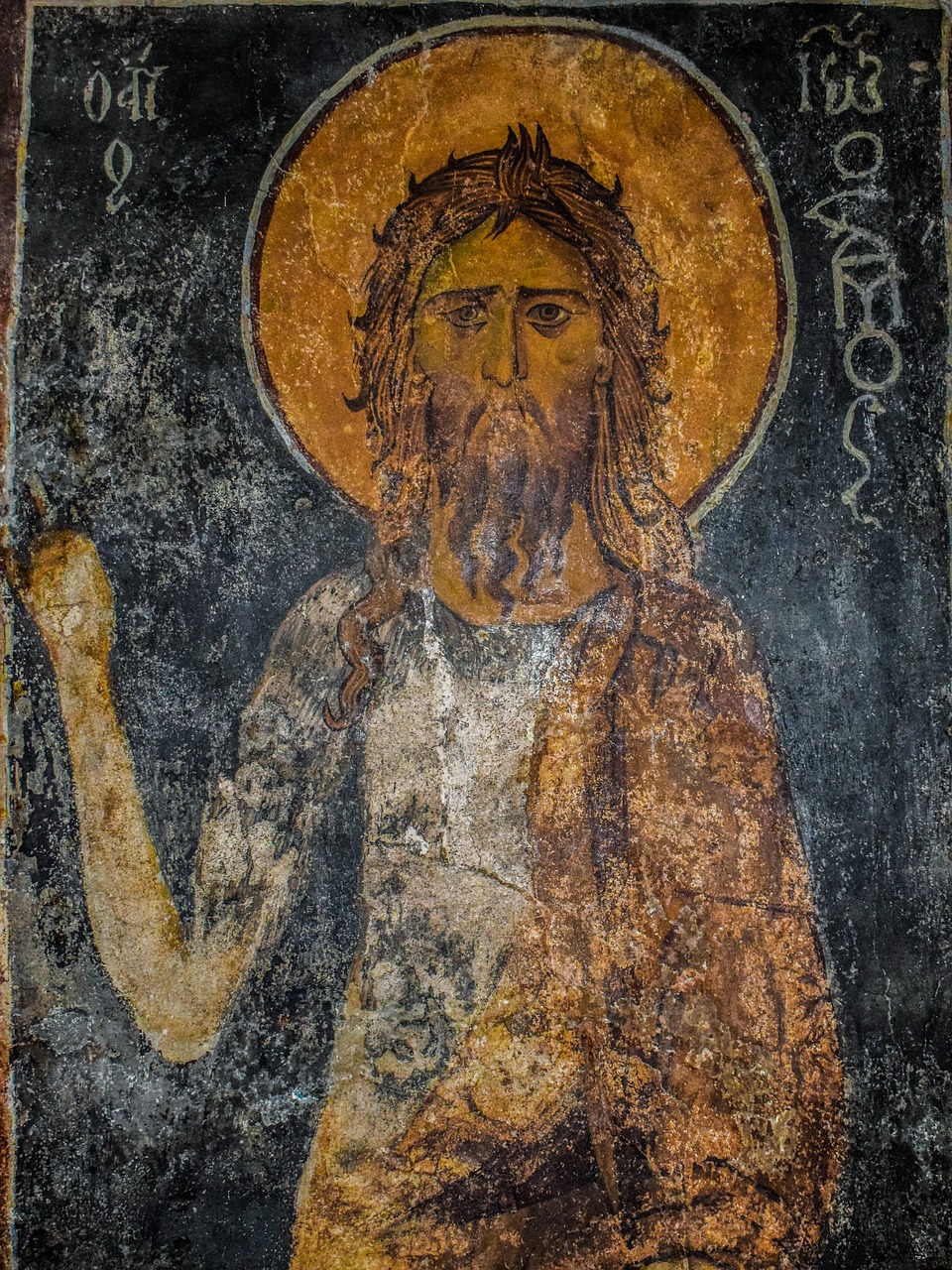
ICON of Saint John the Baptist.

John is unique in the story of salvation. He’s the inter-testamental lynchpin: part Hebrew prophet, part Christian missionary. His strange diet and dress, his preference for the wilderness, and his stern message of repentance puts him in a class with folks like Elijah, Amos, and Isaiah. He doesn’t, however, simply talk about the coming of Emmanuel. He has the distinct advantage of being able to point him out to the crowds: “Behold, the Lamb of God!”

John’s life begins in typical Bible-hero fashion with a miracle-birth story. That is the way scripture bookmarks a life and says: “Pay attention!” as with Isaac, Moses, Samuel, and Jesus himself. We know that John’s life is peculiarly interwoven with that of Jesus from the moment he leaps in Elizabeth’s womb when Mary and her burgeoning womb are present. John, inheriting the priesthood of his father Zechariah, abandons institutional religion to become a never-ending prophet of Advent, announcing “Prepare the way of the Lord!” to all who will listen.

At the same time it’s often pointed out that John never concludes his ministry to become a disciple of Jesus. Even after he declares who Jesus is, he continues to preach and baptize. Later in prison John seems concerned that his own message of repentance or damnation seems discordant with the “mercy and forgiveness” gospel of Jesus being reported to him. He has to ask: Are you the one who is to come, or should we keep looking?

If John is uncertain of his role at times, so were plenty of other people. King Herod is afraid of John and twice as scared of Jesus after he puts John to death. He thinks Jesus may be John’s reincarnation. When Jesus asks his disciples what people are saying about him, they admit that some folks can’t tell him from John, and both John’s and Jesus’ followers got them confused with Elijah.

The fact that John never ceased his ministry even after Jesus started his reminds us that only a few of John’s followers transferred their allegiance to Jesus. The school of John dies hard: His disciples are still practicing their sect in the time of the early church. That is why the late-entry Gospel of John takes pains to subordinate John to Jesus, as when John declares: I am not the Christ. He must increase, and I must decrease.

Scripture
• Matthew 3; 11:2-15; 17:10-13; Mark 1:1-11; 6:14-29; 8:27-30; John 1:6-9, 15-42; 3:22-30; Acts 13:24-25; 18:24-26; 19:1-7

Online
• "John the Baptist: Preparing the Way" by Father Jerome Murphy-O'Connor, O.P., Scripture from Scratch, 1999

Books
• John the Baptist: Prophet and Evangelist by Carl R. Kazmierski (Liturgical Press, 1996)
• John the Baptist: Prophet of Purity for a New Age by Catherine Murphy (Liturgical Press, 2003)


Reprinted with permission from PrepareTheWord.com. ©TrueQuest Communications.

Site:  0 comments  -  Add your own comment  -  Follow my posts  -  Permalink Tags: jesusjohn the baptist
Facebook:
Comments  

What is the structure of the church?

Posted by: Alice L. Camille 🕔 Tuesday 20, November 2012 Categories: Doctrines & Beliefs,Clergy,Mission & Evangelization
When it comes to church structure, the word we’re looking for is hierarchy. From Greek for "holy ruler,” it describes the body of persons in authority within the governance of the church. Could technically be called rule by bishops (from Greek episkopoi for "supervisors"). Starting with the pope, who is bishop of Rome; cardinals, who are themselves bishops; archbishops; bishops; priests, and deacons, who answer to their local bishop; religious orders, and the laity. 

A flow chart can help capture the general structure. Think of the pope as first among bishops. Bishops are Vicars of Christ, which means they, like the pope, have the same boss. When all the bishops get together, as with the Vatican or Lateran or Tridentine Councils, their authority is the highest the church can express.

Structure of the Catholic Church

Cardinals were originally priests with permanent parish assignments. In the 5th century, the title was first given to the superior priest at a major church. Cardinal-priests rendered judgments on clergy and laity, and later served as grand inquisitors in determining heresies. Ninth-century Pope John VIII compared their office to the 70 elders Moses appointed to share decision-making (Numbers 11:16). Eventually the term cardinal, meaning “hinge,” denoted priests assigned to important locations (think Los Angeles, Chicago, New York in today’s terms) who advised and consulted with the pope. Cardinals became electors of the pope in the 11th century by decree of Pope Nicholas II. Cardinals formed a corporation called a college. Their office came to outrank bishops, and in 1514 Leo X placed cardinals just under the pope. The 1917 Code of Canon Law made it imperative for cardinals to be chosen from the clergy—previously a layman could be designated. Pope John XXIII shrunk the pool to bishops in 1962. Paul VI confined papal voting to cardinals under age 80. Today, most cardinals are elevated from bishops in prominent dioceses. The College of Cardinals functions primarily as a consulting body for the pope as well as aiding in the governance of the church throughout the world. Reining in these "princes of the church" has been the challenge of many popes.

The Roman Curia is a bureaucracy that runs everything from diplomatic affairs (Vatican City is the world’s smallest sovereign state) to the Congregation for the Doctrine of the Faith to the Vatican newspaper. These offices have traditionally been filled by archbishops and cardinals. Though under Pope Francis, a number of women religious were named to Vatican offices.

Religious orders and institutes fall within serveral areas within the structure of the church. There are four broad categories of orders and institutes: monastic, canonical, mendicant, and apostolic. Monasteries may be autonomous in their governance, while most orders have central authorities. Some groups are limited territorially, and few universal claims can be made about what they do and how they do it. Somewhere along the chain, though, you can bet someone is accountable to Rome.

The laity, or the People of God, have equal dignity to those ordained but not equal power in the regular governance of the church. The laity carry the authority of their baptism and the general sense of the faithful. "The apostolate of the laity derives from their Christian vocation and the Church can never be without it" (Apostolicam Actuositatem). Their main responsibilty is to be holy witnesses of Christ in the world and further the mission and work of the church.

Scripture
• Acts 20:28; Philippians 1:1; 1 Timothy 3:1-13; 5:17-25; Titus 1:5-9;1 Peter 5:1-5

Online
• “Episkopë and Episkopos: The New Testament Evidence” by Father Raymond E. Brown, S.S.

Books
• Inside the Vatican: The Politics and Organization of the Catholic Church by Thomas Reese, S.J. (Harvard University Press, 1998)
• All the Pope’s Men: The Inside Story of How the Vatican Really Thinks by John L. Allen, Jr. (Doubleday Religion, 2004)


Reprinted with permission from PrepareTheWord.com. ©TrueQuest Communications.

Are there other kinds of Catholics besides Roman?

Posted by: Alice L. Camille 🕔 Wednesday 14, November 2012 Categories: Liturgy

A more precise question might be: Are there Catholics besides those of the Roman rite that are recognized by the church? Anglicanism considers itself both “catholic” and reformed, though they aren’t “Catholic” by Roman standards. While the official relationship between the Vatican and the Church of England is described as warm and cordial, and the Anglican Communion “occupies a special place” (the Second Vatican Council’s Decree on Ecumenism, no. 13), Roman Catholics do not share full communion with Anglicans, which is the all-important sign of unity.

Orthodox churches are another matter. While the split with Rome occurred for Anglicans during the era of the Protestant Reformation, the schism between East and West happened five centuries earlier and is still considered the “great schism.” Because the Eastern tradition maintains apostolic succession, their priesthood and sacraments are recognized as valid by the Roman church. Therefore worship in common is both permissible and encouraged by Rome (Decree on Ecumenism, no. 15), although the churches’ shared sense of communion is partial and still problematic.

Eastern Catholics
WORSHIP in the Slovak-Ukrainian tradition.

Beyond those two distinctions, there are rites that do enjoy full communion with the Latin (Roman) rite: the Byzantine (the largest, including Albanian, Belarusian, Bulgarian, Croatian, Greek, Hungarian, Italo-Albanian, Macedonian, Melkite, Romanian, Russian, Ruthenian, Slovak, and Ukrainian); the Alexandrian (some Coptics of Egypt and Ge’ez Ethiopian), the “West Syrian” (Syriac, Syro-Malankara also in India, and Maronite—Lebanese—the president of Lebanon must by law be a Maronite); the “East Syrian” (Chaldean, with headquarters in Baghdad, and Syro-Malabar in India); and the Armenian.

If you have friends in these rites, you can go to Mass with them and receive communion—but stay awake and pay attention because when you’re not in Rome you can’t always do what the Romans do. The other rites have separate codes of canon law (church law) and very different customs. Some bless themselves with three fingers or genuflect three times, in honor of the Trinity. Communion may be served under both kinds on a little spoon or in the kneeling posture. Parts of the liturgy may be celebrated behind an ornate and beautiful screen called the iconostasis.

Because many of these rites evolved closer to the East, they resemble Orthodox liturgy more than Roman. The clergy are invariably male, may be married, and most likely have more beard than you’re used to. Though it may not be Rome, it is, eucharistically speaking, still home.

Scripture
• John 17:20-26; Romans 12:3-8; 14:1-15:13; 1 Corinthians 12:4-26; Philippians 2:1-4

Books

• The Eastern Christian Churches: A Brief Survey by Ronald Roberson, C.S.P. (Edizioni Orientalia Christiana, 1999)
• Byzantine Theology: Historical Trends and Doctrinal Themes by John Meyendorff (Fordham University Press, 1999)

Online
• Second Vatican Council, Decree on the Catholic Churches of the Eastern Rite Orientalium Ecclesiarum
• An excellent historical introduction to the Eastern Catholic churches from the Office of Religious Education of the Byzantine Eparchy of Parma (Ohio), with the Very Rev. Thomas Loya:


Reprinted with permission from PrepareTheWord.com. ©TrueQuest Communications.

Site:  0 comments  -  Add your own comment  -  Follow my posts  -  Permalink Tags: eastern catholic churches
Facebook:
Comments  

What does the "Word of God" mean?

Posted by: Alice L. Camille 🕔 Wednesday 07, November 2012 Categories: Doctrines & Beliefs,Scripture
Often people use the "Word” and the "Bible” interchangeably, but that is inaccurate because it’s too narrow a definition. While believers accept scripture as the inspired word of God, it’s not the only way God speaks. God spoke originally at Creation and these words became the world, Genesis tells us. John’s gospel also says that this divine word present at the beginning of the world was spoken into time in a new way in the person of Jesus: “And the Word became flesh and made his dwelling among us, and we saw his glory” (1:14).
Ambo


So how can we better understand the Word? By way of human language, which has communication as its purpose. The divine Word is God’s self-revelation; it’s the means by which God communicates with us. God reveals the divine nature and intention in Creation as “good”—a word repeated after each act of creating. God also reveals the divine will in what we call the Ten Commandments: The Book of Deuteronomy calls them simply the Ten Words.

In this law of words we come to appreciate that the word of God has a binding force to it. It is a promise, a covenant. Unlike us, God never talks only to hear himself speak. Divine words are the seal that holds us and God in vital relationship. As in creation, these words are “efficacious”: They take effect as soon as they’re uttered.

The word of God continues to be expressed in prophecy and wise teaching. Such divine self-revelation can lead to miraculous doings, as in the time of Moses, Elijah, Elisha, and Jesus. Or it can be heard through powerful oracles that begin, “Thus says the Lord,” told by Isaiah, Jeremiah, Ezekiel, and most of the “minor” prophets. It’s heard more softly but no less empathically in the teachings and parables of Jesus. Because God’s word contains divine intent, it’s meant to evoke change in those who hear it—just as divine words divide day from night, create a path through the Red Sea, or heal a blind man.

With oracles, however, the effect of the Word depends on the freedom of the human will to accept or deny it. When God’s word acts upon matter, it moves. When God’s word encounters the human person, he or she is free to remain unmoved and unchanged. As the psalmist says: If today you hear his voice, harden not your hearts! (Psalm 95:7-8).

Scripture
• Genesis ch. 1; Deuteronomy 5:5, 22; 10:4; 1 Samuel 3:7-18; Psalm 33:6-9; 95:7b-8; Sirach 42:15-43:33; Isaiah 28:13-14, 23-29; John 1:1-5, 14; Hebrews 4:12-13; 1 John 1:1-4

Online
• The Second Vatican Council’s Dogmatic Constitution on Divine Revelation Dei Verbum
• The Power of Words, by Alice Camille (videotaped parish talk)


Books
• The Names of Jesus (Threshold Bible Study) by Stephen J. Binz (Twenty-Third Publications, 2004)
• God’s Word Is Alive by Alice Camille (ACTA Publications, 2007)


Reprinted with permission from PrepareTheWord.com. ©TrueQuest Communications.
What are visions?

Posted by: Alice L. Camille 🕔 Friday 19, October 2012 Categories: Doctrines & Beliefs,Blessed Virgin Mary and the Saints
Hildegard de Bingen
Hildegard of Bingen

It’s always easier to speak from experience, in which case the best reply to this question would come from Doctors of the Church Hildegard of Bingen (recently named) and Catherine of Siena as well as other saints like Francis of Assisi, Bernadette of Lourdes, or any number of folks on the biblical record like Jacob, Isaiah, Ezekiel, Peter, Paul, and John of Patmos, who wrote the Book of Revelation.

From me, you can get a definition. Visions are understood to be the product of God’s self-communication. As Carmelite Father John Welch puts it, all of Christianity depends on divine revelation, so the hop to visions is not all that unusual for people of faith. Nonetheless it is an extraordinary event that can be expressed in words, ideas, or images. It may have a physical dimension but is more often experienced in the imagination or intuitive understanding.

Visions that include a tangible dimension are considered extremely rare. Juan Diego got an image on tilma cloak from Our Lady of Guadalupe. Philip Neri experienced a globe of fire entering his chest that literally broke his ribs and enlarged his heart. Francis of Assisi had his stigmata. Most visions don’t have that kind of corporeal aspect, and mystics themselves often mistrusted them if they did. “Imaginative visions”—Joan of Arc described hers this way—are often attributed to factors like youth, an elementary religious education, or psychological simplicity. Consider how many mystics had their experiences as children, like those of the Virgin Mary at Fatima, Portugal in 1917.

Mystics agree the most reliable visions are intellectual or intuitive; these are less likely to be distorted by unreliable human senses. Mystics are also the first to say that visions are not the goal of the spiritual life. Most mystics had their visions early and moved into a greater interiority of spiritual communion with God after that. In that sense the vision achieved its purpose along the spiritual journey as a boost upward into something richer and more useful—the point being, for the saints and for the rest of us, that we shouldn’t measure ourselves against these experiences or hanker after them. If even visionaries found them dispensable, they are clearly not prerequisites to grace.

Although faith is based on revelation, church teaching leaves the matter of specific visions open to question. Visionaries in modern times are subject to investigation by church authorities and may be deemed credible—but their experiences are not made matters for doctrinal acceptance for believers. Most of us have inexplicable episodes when we perceive things we have no way of knowing and yet do. If we pay attention, we might see more than we think.

Scripture
• Genesis 32:23-33; Isaiah 6:1-8; Ezekiel 10; Daniel 7:13-18; Acts of the Apostles 9:1-9; 10:9-16; the Book of Revelation

Online
• The Dialogue of Saint Catherine of Siena, "dictated by her, while in a state of ecstasy, to her secretaries, and completed in the year of our lord 1370"

Books
• Our Lady of the Lost and Found: A Novel of Mary, Faith, and Friendship by Diane Schoemperlen (Penguin, 2002)
• Mystics and Miracles: True Stories of Lives Touched by God by Bert Ghezzi (Loyola Press, 2002)


Reprinted with permission from PrepareTheWord.com. ©TrueQuest Communications.


What is Purgatory?

Posted by: 🕔 Friday 05, October 2012 Categories:

We've talked about Purgatory before, but with All Saints and All Souls Days coming up, here's another take on the subject.

The Christian imagination has traditionally depicted Purgatory as a kind of “Hell-lite”: fires and torment but with an end-date at which time souls, having paid for their sins with suffering, get promoted to Heaven. Vivid though these images are, they tend to make Purgatory into a place that exists in time, and really it’s neither. After the death of the body, the soul enters eternity, which is a spiritual realm beyond our sense of place and, by definition, beyond time.

Bosch
"PURGATORY" from The Last Judgment (c. 1500)
by Hieronymous Bosch. Wikimedia Commons.

So what is Purgatory? Every Christian life is a pilgrimage that begins when someone enters earthly life and is baptized into the Body of Christ and reaches its fulfillment in communion with God and all the angels and saints in Heaven.

Death of course is a major step in that journey, but it’s a big leap to go from human life with all its limitations to perfect unity with God. Even those who die with the full benefits of the sacraments of the church—in a “state of grace”—still carry with them the aftereffects of sin. Purgatory supplies the necessary transition into eternal life: It’s a state in which a soul is purified or “purged” of all that still might separate it from God.

It’s the last “stop” on the journey toward communion with God and all the angels and saints that began when someone entered earthly life and was baptized into the Body of Christ. If there is suffering in Purgatory, it’s the pain of the soul’s awareness that it is still separated in some way from God, and that this separation is the consequence of sinful actions in earthly life.

Catholic doctrine says that God’s judgment of each soul occurs at death. For those who led lives of faith and repentance, the way to Heaven is before them, though the remaining obstacles to eternal glory need to be cleared away (and for those who lived and died in deliberate estrangement from God, the possibility exists for that separation to become permanent, which would literally be Hell).

God, however, does not want anyone to be condemned and wishes that all will be saved and enjoy life with God forever. Some theologians today, moreover, think that the state of Purgatory may be as instantaneous after death as is personal judgment.

Whether that's true or not, Purgatory is not only about what happens after death. It also has a lot to do with life in the present. For one thing, those on earth and those “in” Purgatory can pray for another, and thus Purgatory is an expression of intercessory prayer and the communion of saints between this world and the next. What’s at stake in praying for the souls in Purgatory is not a matter of holding them up lest they slip into Hell; the souls in Purgatory are already promised the Heavenly state. Those prayers, though—as well as anything else you offer for them, like an act of charity or a work of mercy—can help move them along the path towards full and complete life with God.

Purgatory is also a powerful reminder that the decisions you make in your relationships with God and neighbor today make a big difference both now and in the end.


Reprinted with permission from PrepareTheWord.com. ©TrueQuest Communications.

Site:  0 comments  -  Add your own comment  -  Follow my posts  -  Permalink Tags: deathpurgatoryheavensin
Facebook:
Comments  

What are third orders, oblates, and associates?

Posted by: 🕔 Tuesday 18, September 2012 Categories:

Throughout its history religious life has had people who are attracted to and want to be part of the spirit of a particular community but not necessarily become a religious sister or brother, nun, or monk. In response, religious communities have over time established various ways so that such folks can more formally share in the spirit of the community. These formal relationships with a community may involve mutual responsibilities, a renewable or life-long commitment, and a rule of life.

Third Order
THIRD ORDER Carmelites (wearing their “profession
scapulars”) gather with Carmelite friars
for prayer at Aylesford Priory in England.

I’ll briefly describe a few of them:

• Third Orders. In some of the early religious communities, the “First Order” referred to the original group of monks or friars. The “Second Order” referred to contemplative nuns who wished to follow in the founding spirit of the First Order. The “Third Order” or “Secular Order” referred to women and men who wanted to live in the spirit of the religious community but remain in their current state of life. The three main congregations with Third Orders are the Carmelites, the Franciscans, and the Dominicans.

• Oblates. The word oblate comes from the word oblation, which in Latin means “offering.” An oblate, then, is one who offers herself or himself to God in and through their association with a particular religious community. This term is most often used within the Benedictines and monastic life.

• Associates. The words associates or affiliates are often used in relation to apostolic religious communities that are not “orders” or monastics as mentioned above.

Each community has different customs in regard to tertiaries (the term for people who belong to a third order), oblates, and associates, so I encourage you to check out their websites and connect with the vocation director of the community. She or he will be able to talk with you not only about religious life but also some of these other approaches to participating.

In addition to these and other formal paths to relationship with a religious community, there are many others. At the I.H.M. Sisters people join us all the time for liturgies, volunteering on a project, helping support the community, visiting with members, attending events, and other activities. Often these are great ways for anyone—including someone discerning a call to religious life—to get to know the community.

A number of communities you can find on the VISION Vocation Network website have third order or other similar organizations, like the associate communities of the Poor Handmaids of Jesus Christ.


Reprinted with permission from PrepareTheWord.com. ©TrueQuest Communications.

Why sing at Mass?

Posted by: Alice L. Camille 🕔 Friday 14, September 2012 Categories: Liturgy,Prayer and Spirituality
Church songbook
“Singing is for one who loves.”—Saint Augustine

My question is: Why don’t we sing more? The importance of singing in ritual is long-established. Can we have a ball game in this country without a rendition of The Star-Spangled Banner? I’m amazed that the same people who belt out a song in the shower, croon along in the car, and know all the words and moves to Thriller don’t crack the songbook in the pews. Granted, not all church music suits your taste or mine. I’m not wild about the “Happy Birthday” song either. But when it’s time to sing it, the liturgy of the moment demands that I play my part.

Saint Augustine, who said many things well, insisted: “Singing is for one who loves.” That is the same Bishop Augustine who considered banning music from his church altogether. Augustine loved music so much he found it far too fetching and distracting to enjoy at liturgies. In the end he adhered to the older proverb: “Whoever sings well prays twice over.” So pass out the song sheets.

Saint Paul was an earlier proponent of church music, back when church was held in somebody’s house. He advocated that believers sing “psalms, hymns, and spiritual songs with gratitude in your hearts to God” (Colossians 3:16). While Augustine got it right that singing is for lovers, happy people in general whistle while they work, and grateful people feel as if they have something to sing about. That could explain a lot of things about why folks in church are reluctant to sing. Ever look around at all those glum faces? Without a significant increase in the spirit of joy and gratitude, don’t expect an increase in responsive singers.

In the Bible a lot of joy and gratitude gets expressed in random acts of music. “Sing to the Lord a new song!” the psalmists say—in the Bible’s own songbook, the Psalms. Many of the big players have a song to sing, especially the women: Miriam at the Red Sea rescue; Hannah at the birth of her child; Deborah after her battleground victory achieved with the help of another woman, Jael; Judith after defeating Holofernes; and Mary when she visits Elizabeth and shares her annunciation. King David himself wrote music, played, and danced—which annoyed his wife, who thought it made him seem frivolous in front of the nation. To those who love and feel joy and gratitude, a little frivolity in public is in order.

Scripture
• Exodus 15:1-18; 1 Samuel 2:1-10; Judges 5; Judith 16:1-18; the Book of Psalms; Luke 1:46-55; Colossians 3:16

Music
• Psalms from the Soul by Rawn Harbor, ValLimar & Frank Jansen, and Val Parker (OCP)
• Psalms for the Church Year by David Haas and Marty Haugen (GIA Publications)

Books
• The Liturgical Music Answer Book by Peggy Lovrien (Resource Publications, 1999)
• Sing to the Lord: Music in Divine Worship (USCCB, 2008)

Image credit: 123RF Stock Photo


Reprinted with permission from PrepareTheWord.com. ©TrueQuest Communications.

Site:  0 comments  -  Add your own comment  -  Follow my posts  -  Permalink Tags: masssingingchurch music
Facebook:
Comments  

What about all the different gods in Hebrew scripture?

Posted by: Alice L. Camille 🕔 Saturday 01, September 2012 Categories: Scripture,Doctrines & Beliefs

I can say this about polytheism in the Bible: It’s there. The worship of many divinities leads to the central conflict for the prophets: Which God is to be Israel’s God? Just because Abraham steps out of the polytheism of his ancestors into a radical covenant with the God YHWH doesn’t mean he, or his heirs, stop believing in the existence of other deities. They simply choose to cast their lot with the God of many promises: land, descendants, and future. YHWH will be their God, and they will be his people.

Blake
WILLIAM Blake's Ancient of Days.

Many names for God are used in the Hebrew Bible. YHWH (pronounced “Yahweh”) is the name Abraham and Moses are given to identify God. God is also called El, a common Semitic word (among Israelites, Arabs, ancient Akkadians, and others) for divine beings both as the generic el and the proper name El, the father of all of Canaan’s gods. El occurs 286 times in the Old Testament. When used to refer to Israel’s God, it’s usually added to another term: for example, El Bethel, the God revealed to Jacob at Bethel. Shaddai, the almighty “God of the mountain,” was an even older name for God that shows up in poems in the Books of Genesis, Numbers, Job, some psalms, and Ezekiel. That Israel’s God would be identified with Mt. Sinai isn’t surprising, given the centrality of the covenant with Moses.

God has many names in scripture, but did Israel worship more than one God? Yes, to their shame, if the Books of Samuel, Kings, and prophecy are taken seriously. Baal-worship is the bane of the prophets, and Jeremiah asserts the women of Jerusalem chased after “the Queen of Heaven,” so goddesses were in the mix, too. The Book of Deuteronomy warns against the sun- and moon-worship practiced by the Amorite and Phoenician peoples, and King Josiah had to end sacrifices to heavenly bodies in 2 Kings 23.

Scholars of the biblical creation story have viewed it as a systematic subjugation of other gods: the Persian belief in the uncreated light (Day 1); Baal who brings forth rain and growing things (Days 2 and 3); all heavenly bodies including the Egyptian sun god Re (Day 4); primeval sea monsters of Mesopotamian mythology (Day 5); and humanity, whose purpose is to share creation’s stewardship with God in dignity rather than bear the yoke of the gods as in the stories of other deities (Day 6). Most ancient creation stories speak of divine rest; only in Israel’s story is humanity invited to share in it with the institution of the Sabbath (Day 7). It could be argued that none of that needed to be written if there weren’t a significant attraction to polytheism in ancient Israel.

Scripture
• Genesis 1:1-2:4; Joshua 24:1-24; YHWH: Exodus 3:4-15; Shaddai: Genesis 17:1; 28:3; 35:11; 43:14; 48:3; 49:25; Exodus 6:3; Numbers 24:4, 16; Psalms 68:15; 91:1-2; Ezekiel 1:24; 10:5

Books
• The Collegeville Pastoral Dictionary of Biblical Theology ed. by Carroll Stuhlmueller, C.P. (Liturgical Press, 1996): entries on “God,” pp. 383-386; “El/Elohim,” pp. 243-244; “Yahweh,” p. 1111-1114; “Names,” pp. 665-667
• The Names of God in Judaism, Christianity, and Islam: A Basis for Interfaith Dialogue by Máire Byrne (Continuum, 2011)


Reprinted with permission from PrepareTheWord.com. ©TrueQuest Communications.


Is there a place for dissent in the church?

Posted by: Alice L. Camille 🕔 Wednesday 22, August 2012 Categories: Church History,Doctrines & Beliefs

Dissent is best understood and undertaken in the context of some other important concepts: authority, tradition, obedience,and the sense of the faithful. I can’t do justice to these topics here but for a fuller treatment on authority see my article in the 2013 VISION Catholic Religious Vocation Discernment Guide.

First, an affirmation of dissent by Karol Wojtyla, later Pope John Paul II, in The Acting Person: “The structure of a human community is correct only if it admits not just the presence of a justified opposition but also that practical effectiveness of opposition required by the common good.” The tender issue here is that the church is not only a human community but also a mystical body. That which is mortal about the church must respect and address justified opposition. Which leads to the sticking point: Who decides what is justified?

Congar
YVES CONGAR, O.P. (1904-1995)

I’d like to suggest two determinants: the magisterium and the mystical body. The magisterium, the church’s teaching body, is composed in each generation of specific persons who, through apostolic succession and the power of the Holy Spirit, have attained the seats of discernment: pope, curia—the Vatican offices that assist the pope in governing the church—the College of Cardinals, and national bishops’ conferences. They write the documents promulgated into binding teaching for the whole church.

The mystical body of Christ is a much larger assembly. It’s comprised of the faithful to whom the Holy Spirit is likewise entrusted. That Spirit can draw up from the whole body a sense of the faithful (sensus fidelium) that engenders a sea change in church understanding, the way Pentecost did for its first responders. For the most part the magisterium and the sensus fidelium confirm each other, as in the Acts of the Apostles: “The community of believers was of one heart and mind” (4:32). Sometimes they also are at odds, as when Saint Paul discerned that Gentiles should not have to come to Christianity by way of Judaism (Acts 15 and Galatians 2:11ff).

Paul is the poster child for handling church dissent. He went to Jerusalem to argue his case and get a ruling from Saints James and Peter and the elders. He also—literally—got into Peter’s face later in Antioch—but he stayed in relationship, which was the main thing. Every great dissenter after him—Saint Thomas Aquinas, Saint Catherine of Siena, Cardinal John Henry Newman, the great Dominican theologian Yves Congar, the Australian saint Sister Mary MacKillop, among others—stayed in tandem with the magisterium and eventually pulled it forward.

Scripture
• Acts 2:1-4, 42-47; 4:32-35; 9:31; 15:1-29, 36-39; Galatians 2:11-14

Books
• Faithful Dissenters: Stories of Men and Women Who Loved and Changed the Church by Robert McClory (Orbis Books, 2000)
• Creative Fidelity: American Catholic Intellectual Traditions ed. by R. Scott Appleby, Patricia Byrne, and William L. Portier (Orbis Books, 2004)
• Creative Fidelity: Weighing and Interpreting Documents of the Magisterium by Francis A. Sullivan (Paulist Press, 1996)

Online
• Documents of the pope and the Vatican curia
• Documents of church councils


Reprinted with permission from PrepareTheWord.com. ©TrueQuest Communications.

Do Catholics believe in evolution?

Posted by: Alice L. Camille 🕔 Wednesday 15, August 2012 Categories: Scripture,Doctrines & Beliefs

Evolution
No is the wrong answer to the question, Do Catholics believe in evolution?; while yes is too small a response. What Catholics believe is a matter of creed and doctrine. The church teaches as doctrine that God is the Creator, but the how of creation is not doctrinally determined. The church doesn’t uphold evolution as an element of faith: i.e., believe it or walk the plank. Catholic teaching allows that God may have chosen to create the world through the process of evolution. We believe truth has integrity; there can be no contradiction between scientific truth and the religious kind. Theology and science are not in competition but are complementary adventures in understanding. So if a thing is true, it’s naturally true for people of faith.

Darwin
CHARLES DARWIN (1809-1882) published
On the Origin of Species by Means
of Natural Selection
in 1859.

The church is more emphatic on matters like creationism. This position claims evolution is completely incompatible with divine creation literally described in Genesis. Scientific creationism, an offshoot, goes so far as to say that biblical truth is the only science acceptable to Christians. Catholic theologian John Haught replies that not only does this stance deprive science of its legitimacy, but such ideas trivialize the Bible by reducing it to a biology lesson.

The church’s view of evolution has itself evolved. In 1950 Pope Pius XII affirmed that evolution did not contradict faith so long as the immediate creation of the human soul by God was not at issue. Pope John Paul II showed similar caution about the soul becoming a “simple epiphenomenon” of living matter—a result of the physical body, not something supernatural and infused in the body by God.

Pope Benedict XVI did not hesitate. Before his papacy in 2004, he stated: “While there is little consensus among scientists about how the origin of the first microscopic life is to be explained, there is general agreement among them that the first organism dwelt on this planet about 3.5-4 billion years ago. Since it has been demonstrated that all living organisms on earth are genetically related, it is virtually certain that all living organisms have descended from this first organism. Converging evidence from many studies in the physical and biological sciences furnishes mounting support for some theory of evolution to account for the development and diversification of life on earth, while controversy continues over the pace and mechanisms of evolution.” In 2009 the pope also said God was “not only involved in the origins of the universe but continually sustains the development of life and the world” and “is the cause of every being and all becoming.”

Scripture
• Genesis chs. 1-2; Proverbs 8:22-36; Wisdom 7:17-22; John 1:1-5; Acts 17:24-28; 1 Timothy 4:4-5; 2 Timothy 3:16-17; Hebrews 11:3

Online
• “Evolution and God: Darwin and Theology 150 years after The Origin of the Species” by Aloysious Mowe, S.J., Woodstock Report, June 2009

Books
• Making Sense of Evolution: Darwin, God, and the Drama of Life by John F. Haught (Westminster John Knox Press, 2010)
• Christianity in Evolution: An Exploration by Jack Mahoney (Georgetown University Press, 2011)

Lecture
• Theologian and biological scientist Dr. Celia Deane-Drummond of the University of Notre Dame will deliver the 2012 Albertus Magnus Lecture on “Human Uniqueness Reconsidered: Human Evolution and the Image of God,” Thursday, November 15, 2012 at 7:00 p.m. in the Auditorium of the Priory Campus of Dominican University in River Forest, Illinois just west of Chicago. More information . . .


Reprinted with permission from PrepareTheWord.com. ©TrueQuest Communications.

What does the Bible say about God?

Posted by: 🕔 Thursday 02, August 2012 Categories: Scripture,Doctrines & Beliefs
God of Bible

The short answer to this question: “A lot.” There are 73 books included in the Bible used by Catholics. By one estimate, the word “God” appears 3,358 times in those books and the word “Lord” another 7,736 times. So where to begin?

God wants to be known by humanity and is constantly reaching out to us to make that possible. From God’s stroll in the Garden of Eden (Genesis 3:8) right through to God’s definitive revelation in the person of Jesus and the coming of the Holy Spirit, God is involved in a constant process of communication with humanity.

How can we get a better idea of what God is like? The Letter to the Romans gives us one place to start: Take a good look at God’s creation: “Ever since the creation of the world, God’s invisible attributes of eternal power and divinity have been able to be understood and perceived in what God has made” (Romans 1:20). The wonders of the natural world give us hints of God’s qualities. Be sure to stay in touch with the beauty of God’s creation by making some time for a walk in the woods, a weekend of camping, an evening of gazing at the night sky.

Above all, we learn about God through Jesus because he lived with and as one of us. When we look at the testimony of scripture, we see that Jesus represents the fullness of God’s revelation to humanity. As the Letter to the Hebrews puts it: “In times past, God spoke in partial and various ways to our ancestors through the prophets; in these last days, he spoke to us through a son . . . who is the refulgence [radiance] of his glory, the very imprint of his being” (Hebrews 1:1-3). Or, as Jesus himself explained to the apostle Phillip: “Whoever has seen me has seen the Father” (John 14:9).

By his example Jesus shows us that God possesses and expresses the noblest of qualities to perfection—truth, beauty, justice, mercy, grace, goodness, compassion—in a word, love. In fact, Jesus lived and suffered as one of us because, in the well-known quote from John 3:16, “God so loved the world.” What greater love is there than “to lay down one’s life for one’s friends,” as Jesus did (John 15:13)?

We also know God through the gift of the Holy Spirit, who appears throughout Hebrew scripture—beginning with the second verse of Genesis where the Spirit, in the form of a “mighty wind,” hovered over the waters. Midway through Hebrew scripture we find the psalmist’s plea, “Do not drive me from before your face, nor take me from your holy spirit” (Psalm 51:13).

The Holy Spirit appears in many passages in the New Testament. Jesus promised to send his followers a Helper or Comforter who would be with them always (John 14:16), and in the “great commission” at the end of the Gospel of Matthew, one of the lynchpins of Christian faith in the Trinity, Jesus says, “Go, therefore,and make disciples of all nations, baptizing them in the name of the Father, and of the Son, and of the holy Spirit” (Matthew 28:19).

The Holy Spirit comes to the forefront in the Acts of the Apostles, most famously at Pentecost, when members of the early church “were all filled with the holy Spirit and began to speak in different tongues,as the Spirit enabled them to proclaim” (Acts 2:4).

While the Bible does indeed provide us with a great variety of testimony to the manifold, mysterious, and wonderful nature of God, in our human experience getting to know God doesn’t happen all at once. It is a lifelong process that unfolds in spiritual reading and reflection, prayer, and in our interactions with others—in “fellowship,” to use the church term.

Fellowship happens when we gather to worship, surely, but also in our homes and offices and in all our daily interactions with others, both casual and intimate. When we interact with a sense of God’s presence, even when there are only “two or three” of us, we know that Jesus is there with us (Matthew 18:20).

Perhaps one of the most useful of the many titles found in the Bible for God is Immanuel or Emmanuel (Isaiah 7:14), which literally means “God-with-us.” That conviction, firmly rooted in our hearts, may be all we ever need to know about our loving God.

Resources
• See pt. 1, sec. 1, ch. 2 of the Catechism of the Catholic Church, “God Comes to Meet Man,” for a description of God’s interaction with humanity

• For children ages 4-9: Images of God for Young Children by Marie-Helene Delval, illustrated by Barbara Nascimbeni, Eerdmans, 2010


Reprinted with permission from PrepareTheWord.com. ©TrueQuest Communications.

Why do we say Jesus "descended into hell"?

Posted by: Alice L. Camille 🕔 Monday 16, July 2012 Categories: Scripture,Doctrines & Beliefs

This phrase appears in the less commonly prayed Apostles’ Creed (not in the Nicene Creed usually recited at Mass), which may account for why more pew-sitters don’t question them. After all, church teaching defines hell as the place of the damned. Why would Jesus visit those who cannot be saved?

descent into hell
ICON of Jesus descending into hell (detail).

The answer lies buried in scripture, as it often does. Theologically, hell derives from an earlier conception of Sheol (Hebrew) and Hades (Greek). Whatever you call it, ancient ideas about the afterlife weren’t pretty. There was no life after death in the ancient reckoning: just an underworld of disembodied bare consciousness without volition or motion. Forget everything you know about Judgment Day: the good, the bad, and the boring were all presumed to end up in the same spiritual substrata of uselessness. The dead were called shades, literally shadows of their former selves. Unable to will or to act, they simply moldered together and lamented their lost opportunities.

In the great epic writings of the ancients, heroes often visited the underworld looking for answers, vanquished enemies, or old friends. They might talk to them but they couldn’t offer any assistance. The story of Jesus is different. A wonderful homily for Holy Saturday found in the Liturgy of the Hours’ Office of Readings says it all: “Today a great silence reigns on earth, a great silence and a great stillness . . . because the King is asleep. . . . He has gone to search for Adam, our first father, as for a lost sheep. Greatly desiring to visit those who live in darkness and in the shadow of death, he has gone to free from sorrow Adam in his bonds and Eve, captive with him . . . ‘I did not create you to be a prisoner in hell. Rise from the dead, for I am the life of the dead’ ” (see the Catechism of the Catholic Church, no. 635).

The idea that Jesus went to the dead first with the good news of the Resurrection is not a fabrication of early homilists. John’s gospel claims: “The hour is coming and is here now when the dead will hear the voice of the Son of God, and those who hear will live” (5:25). Luke picks up the theme in Acts, and Paul alludes to it in his letters. The First Letter of Peter says that after being put to death Christ “went to preach to the spirits in prison, who had once been disobedient” and that “the gospel was preached even to the dead” (3:18-19; 4:6). So that answers the question: Jesus went to the dead first to bring good news to those who needed it the most.

Scripture
• Psalms 6:6; 88:2-13; Matthew 12:40; John 5:25; Acts 2:24-31; Romans 8:11; 10:7; 1 Corinthians 15:20; Philippians 2:10; Ephesians 4:9; Hebrews 2:14-15; 13:20; 1 Peter 3:18-19; 4:6; Revelation 1:18

Books
• Death and Afterlife: A Theological Introduction by Terrence Nichols (Brazos Press, 2010)
• Shades of Sheol: Death and Afterlife in the Old Testament by Philip S. Johnston (IVP Academic, 2002)


Reprinted with permission from PrepareTheWord.com. ©TrueQuest Communications.

Why does God let bad things happen?

Posted by: 🕔 Wednesday 11, July 2012 Categories: Doctrines & Beliefs
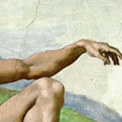
God

This is one of those questions that are as old as humanity: Could it really be possible that a good and all-powerful God not only allowed evil and sin to come into the world but also continues to tolerate them?

Looking at the world, the case for the prosecution seems pretty strong. The human race can’t seem to rid itself of its addiction to violence in all its many splendored forms. It can’t figure out how to share its considerable resources so that everyone has enough. It seems bent on destroying the planet on which it depends for existence. It doesn’t take very good care of many of its children. Ignorance, selfishness, meanness, short-sightedness, vulgarity, corruption, and dishonesty are commonplace. Many people are so wrapped up in themselves that they barely notice anything around them beyond what they want or what is getting in their way. Most days are pretty much the Seven Deadly Sins on Parade. Pockets of goodness exist, but somebody doing something nice for another person is a news story.

On top of all that, things don’t seem to have changed much. In the early church a movement of Christians called Gnosticism looked at all the badness going on around them and concluded creation was just that—bad—and that the God they had been taught to believe created the world couldn’t really be God, given the results. There had to be some other, true God.

Early church fathers like Saints Irenaeus and Augustine recognized that to challenge the most basic belief of all—about God—threatened the entire faith on which that belief was based, so these great theologians spent a lot of time refuting Gnostic-type beliefs. They realized though, that they had to come up with their own explanation of how evil and sin came into the world and how God allowed—and continued to allow—them to exist.

The argument went like this. When God creates something, that something is by necessity outside of God, which means God’s perfect power and goodness do not translate into what is created, which thus has limits, imperfections, and flaws. Like many people of faith of his time, Augustine looked to the biblical story of the Fall of humanity and suggested that the flaw that allowed Adam and Eve to disobey the one and only rule God gave them was pride. Pride was a kind of self-willfulness. It gave you a sense you could exist on your own without reference to God.

Adam

All that theology may be cold comfort in response to death, illness, accident, injury, betrayal, cruelty, and other bad things, but the “good news”—literally—is that throughout all time God has revealed that it is the divine intention to bring God’s beloved creation back into harmony. The gift of God’s only Son has been the greatest demonstration of that offer of love. That Son was himself the victim of evil and sin, yet God was able to draw the great good of salvation and eternal life from even that cosmically bad event.

Sin turns you away from God and others, and while the possibility of sin may be unavoidable in this created world, it is always possible to choose to go from being self-centered to other-centered.

Online
• The Catechism of the Catholic Church has an excellent discussion of creation, nos. 268-314
• See also Pope John Paul II’s talk “Created Things Have a Legitimate Autonomy”
• For Irenaeus’ discussion of these issues, see Book 4, Chapter 38 of his Against Heresies
• For Augustine, see Chapters 1-5 of Book 14 of his City of God


Reprinted with permission from PrepareTheWord.com. ©TrueQuest Communications.

Site:  0 comments  -  Add your own comment  -  Follow my posts  -  Permalink Tags: godsinaugustinecreationevil
Facebook:
Comments  

Is it OK to use “real” bread at Mass?

Posted by: Alice L. Camille 🕔 Monday 02, July 2012 Categories: Doctrines & Beliefs

If by real you mean the kind you get in the supermarket, the short answer is no. First, here’s the ruling, which appears in the directives of a 2004 Vatican instruction (Redemptionis Sacramentum, no. 48):

“The bread used in the celebration of the Most Holy Eucharistic Sacrifice must be unleavened, purely of wheat, and recently made so that there is no danger of decomposition. It follows therefore that bread made from another substance, even if it is grain, or if it is mixed with another substance different from wheat to such an extent that it would not commonly be considered wheat bread, does not constitute valid matter for confecting the Sacrifice and the Eucharistic Sacrament. It is a grave abuse to introduce other substances, such as fruit or sugar or honey, into the bread for confecting the Eucharist. Hosts should obviously be made by those who are not only distinguished by their integrity, but also skilled in making them and furnished with suitable tools.”

The Code of Canon Law (canon 924) and the General Instruction of the Roman Missal (nos. 319-321) affirm this practice. GIRM adds: “By reason of the sign, it is required that the material for the Eucharistic celebration truly have the appearance of food. Therefore, it is desirable that the Eucharistic bread, even though unleavened and made in the traditional form, be fashioned in such a way that the priest at Mass with the people is truly able to break it into parts and distribute these to at least some of the faithful. However, small hosts are not at all excluded when the large number of those receiving Holy Communion or other pastoral reasons call for them.”

According to the Catholic Encyclopedia, we don’t know what the apostles used. It’s possible they preferred the azymous (unleavened) bread used for Passover celebrations, so the Western church tended toward that. Eastern churches preferred fermented (leavened) bread, as they still do. Early on the bread and wine were contributed by the faithful themselves, each contributing their portion. So types and textures surely varied. As reverence for the Eucharist grew, special altar breads were prepared, rounded, and stamped with a religious emblem. These “hosts” became smaller and thinner as the familiar communion wafers we receive today.

Scripture
• Exodus 12:8, 15-20; 13:3, 6-7; 29:2; Leviticus 23:4-8; Deuteronomy 16:3-8; Matthew 26:17; Mark 14:12; Luke 22:7-8; 1 Corinthians 5:6-8

Books
• The Breaking of the Bread: The Development of the Eucharist According to the Acts of the Apostles by Eugene LaVerdiere, S.S.S. (Liturgy Training Publications, 2007)


Reprinted with permission from PrepareTheWord.com. ©TrueQuest Communications.

Site:  0 comments  -  Add your own comment  -  Follow my posts  -  Permalink Tags: eucharistbread
Facebook:
Comments  

What is Wisdom?

Posted by: Alice L. Camille 🕔 Friday 22, June 2012 Categories: Scripture,Doctrines & Beliefs
Wisdom
ICON of Sophia, the Wisdom of God of Kiev.

IN THE BIBLE, Wisdom refers variously to smart decision-making, wise teaching, a body of literature, one particular book, a remarkable woman, and the person of Jesus. But let’s start at the beginning. Wisdom is originally presented as a divine attribute: an aspect of God to be imitated by those made in God’s likeness. Like other divine characteristics—love, justice, mercy, truth—God desires to share wisdom with us. Solomon is right to pray for it. The Holy Spirit imparts seven gifts to those fully initiated into the church; wisdom is at the top of the list, followed by understanding, knowledge, counsel, courage, reverence, and wonder in God’s presence. Wisdom comes first as the grace that assists in the practice of all other virtues.

The Bible explores this important aspect in many ways. In Hebrew the word refers to practical instructions on how to live: how to run your household and business, how to worship, and how to deal with your neighbor. These wisdom teachings frequently take the form of two-line sayings that are easy to remember, like proverbs. They may tell you what to do in positive terms, what not to do in the negative, or contrast the actions of a fool to one who is wise.

Five Old Testament books deal primarily with this kind of instruction: Proverbs, Job, Ecclesiastes, Sirach, and the Wisdom of Solomon. This grouping came to be called “Wisdom literature” or the Wisdom tradition, from a school of teaching very popular in the Near East in the five centuries before the time of Jesus. It was a period when the Jewish community was scattered farther than Israel and was heavily influenced by Greek ideas. Much wisdom literature was written in Greek, using the word sophia for “wisdom.” It’s easy to see how Sophia would become personified as Lady Wisdom, a woman worth winning. As students of the wisdom school were young men, courtship would be an attractive metaphor for attaining wisdom.

As a divine attribute, Wisdom was involved in the creation of the world and was an active principle in its design, as Proverbs 8 describes. John’s gospel defines another presence in that event: the preexisting Word of God, which linked Jesus to Wisdom. Saint Paul emphatically identifies Christ as the wisdom of God. The wisdom God once shared through messengers and media is now a Word delivered in the flesh.

Scripture
• Job 28:12-28; Proverbs 1:20-33; ch. 8; 9:1-6; Wisdom chs. 7, 8, and 9; Sirach ch. 24; Isaiah 11:2-3; John 1:1-18; 1 Corinthians 1:18-31; Colossians 1:15-20

Books
• From Earth’s Creation to John’s Revelation: The INTERFACES Biblical Storyline Companion by Barbara Green, O.P., Carleen Mandolfo, and Catherine M. Murphy (Liturgical Press, 2003)
• Wisdom’s Many Faces by R. Charles Hill (Liturgical Press, 1996)

Online
• Wisdom Christianity from The Bede Griffiths Trust


Reprinted with permission from PrepareTheWord.com. ©TrueQuest Communications.

Is there a “right time” to be called by God?

Posted by: 🕔 Tuesday 12, June 2012 Categories:

There is a right time to be called by God, and that time is right now! It can seem as if all the planets have to align or there has to be a choir of angels in the background, but in fact there’s no better time than the present. Regardless of who you are, where you’ve been, or where you are going, God calls you in this very moment. There are great stories in scripture of people being called at ordinary and extraordinary moments—an absurd proposal (Genesis 18:1-15, 21:1-7), a party (John 2:1-11), a road trip (Acts 9:3-6), and many others.

What does it mean to be called by God? It means that God desires to connect personally with each and every one of us and that our whole life is a response to God. We commit ourselves to a life relationship with person, family, or community. We seek education in order to prepare ourselves for a certain form of service in the world. We build a career using the gifts and talents we have been given. In these and other ways we give our lives to God.

There are also smaller but no less significant choices we make day-to-day in response to God’s call: a kind word to a stressed-out colleague, an opportunity to enjoy the rain, an extra effort to make a good project great.

The key is to be open to God’s invitation to connect with God here and now. In this way we open ourselves to think, feel, and act from a graced place. It can be helpful to have a spiritual friend or mentor with whom you can talk about calling (click here for more on having a spiritual director) and also to read the stories of how others have been called—be sure to check out the stories in scripture and stories about the saints.


Reprinted with permission from PrepareTheWord.com. ©TrueQuest Communications.
SOCIALIZE

Follow Us

CALENDAR

Click on a date below to see the vocation events happening that day!