

Questions Catholics Ask

| ➕ | ➕

More questions...and responses

Is the Bible infallible?

Posted by: Alice L. Camille 🕔 Wednesday 03, August 2016 Categories: Scripture,Doctrines & Beliefs
Is the Bible infallible?
Biblical truth is sometimes a matter of historical record, but always a matter of revelation.

The reliability of Scripture is an important issue. Let’s start with a basic Catholic position: The Bible is true. And some of it really happened. In other words, our understanding of Scripture has to address not only whether it’s true but how it’s true. Biblical truth is sometimes a matter of historical record, but always a matter of revelation. These texts were produced to impart the lived tradition of believers. If you trust in the God of Israel and commit to the way of Jesus, the Bible is a primary means of exploring the truths of your faith.

Does this imply that the Bible contains no mistakes? Obviously, ahistorical sections won’t necessarily square with “the facts” as we appreciate them archaeologically. Plus the Bible’s pre-scientific origins frequently betray a sense of the world we moderns flatly reject. The ancients’ lack of concern with historical method and complete innocence of scientific principles place sacred texts like Scripture in the category of mythos, or “higher truth.” This creates a dilemma for modern folk, who rely on science to “tell us the truth” about reality. Our ancestors used storytelling to convey what’s genuine and reliable.

Should we expect discrepancies between the cultural and scientific sophistication of writers who lived 2,500 years ago and today? Absolutely! Nonetheless, antique perceptions of the world don’t jeopardize the sacred writers’ transformative revelation: that God is creator, redeemer, and sanctifier of us all.

Vatican II explained the Bible’s validity in this way: "The books of Scripture, firmly, faithfully, and without error teach that truth which God, for the sake of our salvation, wished to see confided to the sacred Scriptures" (Dei Verbum, 11). This careful statement underscores that the truth we need for our ultimate rescue from sin and death is entirely and safely transmitted by these sacred stories.

Catholics view Scripture as a collaboration between inspired authors and the Holy Spirit. Wherever human beings are involved, naturally, human limitation can’t be far behind. Early church fathers such as Origen and Augustine accepted biblical inaccuracies and literary exaggerations as a natural feature of God’s full partnership with the sacred authors. Thomas Aquinas accepted “something imperfect” in any prophetic work for the same reason. Acknowledging pre-scientific miscalls and literary license is a far cry from insisting the Bible must either be inerrant or bogus. For believers, truth is bigger than history or science.

Scripture: Baruch 3:36-37;John 1:1-3, 14; 14:6; 20:30-31; Romans 1:19-20;2 Corinthians 4:6; Ephesians 1:9-10; 2 Timothy 3:16-17; Hebrews 1:1-2; 2 Peter 1:19-21; 3:15-16

Books: The Inspiration and Truth of Sacred Scripture – Pontifical Biblical Commission (Collegeville, MN: Liturgical Press, 2014); Biblical Fundamentalism: What Every Catholic Should Know – Ronald Witherup, PSS (Collegeville, MN: Liturgical Press, 2001)


Reprinted with permission from PrepareTheWord.com. ©TrueQuest Communications.

Can Catholics practice yoga?

Posted by: Alice L. Camille 🕔 Tuesday 05, July 2016 Categories: Prayer and Spirituality,Doctrines & Beliefs

Yoga

Full disclosure: I’ve been taking yoga classes on and off (mostly off) for 30 years. Fuller disclosure: I’m lazy and this is the closest to exercise I’ve ever come. So I admit I’m stunned whenever the suitability of yoga for Christians comes up. My first yoga teacher from 30 years ago is today a well-respected Catholic priest. My current teacher is a devout Russian Orthodox woman whose 40-day fast during Lent put my wobbly lenten observance to shame.

Those who are suspicious of yoga quote the Pontifical Council for Interreligious Dialogue’s document: Jesus Christ, the Bearer of the Water of Life. This text considers New Age beliefs in a discerningly critical light, and I agree with its principles. As a catechist I don't espouse New Age religion, and as a former librarian I know quite a bit about how flakey and narcissistic New Age teachings can be. Religion loses something vital when reduced to a spiritual selfie. On the God quest, God necessarily displaces the ego as the center of meaning and authority.

The anxiety about yoga seems to reside in its origins in Hindu, Buddhist, and Jainist spiritual practice. Nobody seems anxious that the Olympic Games began as a religious festival honoring the Greek god Zeus. Catholics who borrow the Sedar celebration from Judaism during Lent don’t fret about whose faith it properly belongs to. Contemplation is a prayer form that Thomas Merton shared with Buddhists with no apparent harm done.

Is yoga a valid form of prayer for Christians? The Catechism of the Catholic Church (especially #2697-2719 on "The Life of Prayer") offers a good understanding of what Christian prayer is and is not. So, while many fishermen, mountain climbers, and camping enthusiasts tell me they find God in these activities, the Catechism makes it clear that the experience of physical fitness and enjoying nature, while good in themselves, are not the same thing as praying or worship. This means Sunday morning is for Mass; put on your running shoes later.

A distinction might be drawn between restless Catholics who go to ashrams to explore alternative spiritualities to their faith, and folks who do yoga or tai chi at the gym for the exercise. I go to church to express my Catholic Christian relationship with God. When I leave church, I seek to bring the encounter with God everywhere I go. To the laundromat, the grocery store, and yes, to the gym.

Scripture: 2 Samuel 6:14-15; John 8:31-32; Romans 12:1-2; 1 Corinthians 6:19-20

Books: Prayer of Heart and Body: Meditation and Yoga as Christian Spiritual Practice – Thomas Ryan, CSP (Mahwah, NJ: Paulist Press, 2001); Holy Goals for Body and Soul: Eight Steps to Connect Sports with God and Faith – Bishop Thomas Paprocki (Notre Dame, IN: Ave Maria, 2013)


Reprinted with permission from PrepareTheWord.com. ©TrueQuest Communications.

Site:  0 comments  -  Add your own comment  -  Follow my posts  -  Permalink Tags: yoganew age
Facebook:
Comments  

Where can Mass be celebrated?

Posted by: Alice L. Camille 🕔 Tuesday 05, July 2016 Categories: Sacraments,Liturgy,Doctrines & Beliefs
Saint Ita Catholic Church in Chicago

The Eucharistic celebration is called “the source and summit” of our faith—both the origin and epitome of what we believe—in church documents. The Table of the Lord, AKA the altar, is at the center of our lives as Catholic Christians. Everything we do emanates from that starting point.

So where that celebration takes place is of no small consideration. According to the General Instructions for the Roman Missal (GIRM 288), the People of God normally gather in a church. When the local building is too small for the assembly, as for a papal Mass, another “respectable” setting (auditorium or stadium) can be employed. Another lovely provision is this: “sacred buildings and requisites for divine worship should be truly worthy and beautiful and be signs and symbols of heavenly realities.” So all that floor polishing and statue dusting my mother does in her home parish with her friends is canonically approved.

Canon Law (n. 932) specifies that Mass is to be celebrated on a dedicated or blessed altar, as well as in a sacred place—unless “necessity requires otherwise.” Necessity has made the hood of a Jeep into an altar in wartime; wooden pallets or crates can be fashioned into a vineyard altar for farm workers; a hut can serve as a chapel in mission lands. In lands where Mass is prohibited, the celebration can be held in hidden places like mines, caves, or tents. Leading youth groups on hikes, Archbishop Karol Wojtyla (Saint John Paul II) celebrated Eucharist on a flat boulder in the woods. In any setting, the traditional cloth and corporal should be used to designate the table or surface commandeered for divine service.

Here’s a surprise: When the cause is just and with proper approvals, a priest can also celebrate Mass in an ecclesial community or church structure that is not in full communion with the Catholic Church “so long as there is no scandal.” (n. 933) The aforementioned scandal might include the confusion that results if some did not appreciate the difference between, say, the Lutheran host church and the Roman Catholic liturgy being offered. Such time-shares are often necessary when a Catholic church has been damaged or destroyed by natural disaster, terrorist attack, or military forces. The bottom line is that sacred space with an attention to beauty and respectful worship is the norm for Mass. But even more important than the venue is the necessity to make the Eucharist available to all under every circumstance.

Scripture: Mark 14:22-24; Luke 21:5-6; 2 Corinthians 4:7-11; 5:1; 1 Peter 2:4-6

Books: The General Instruction of the Roman Missal (Washington, DC: United States Conference of Catholic Bishops, 2011); The Liturgical Environment: What the Documents Say – Mark G. Boyer (Collegeville, MN: Liturgical Press, 2015); The Ministry of Liturgical Environment – Joyce Ann Zimmerman (Collegeville, MN: Liturgical Press, 2016)


Reprinted with permission from PrepareTheWord.com. ©TrueQuest Communications.

Site:  0 comments  -  Add your own comment  -  Follow my posts  -  Permalink Tags: masseucharist
Facebook:
Comments  

I've been told Catholic devotion to saints contradicts what the Bible says about graven images.

Posted by: Alice L. Camille 🕔 Wednesday 15, June 2016 Categories: Blessed Virgin Mary and the Saints,Church History,Doctrines & Beliefs
Golden calf

Let's talk about that. Someone knocks on your door and presents you with some Bible passages: Exodus 20:4-6; Deuteronomy 5:8-10. They advise you to take down your Madonna and Child statue and to stop wearing your St. Anthony medal. Does the Bible view these objects as dangerous or even blasphemous?

In the first of the Ten Commandments, the passage reads: "You shall not make for yourself an idol or a likeness of anything in the heavens above or on the earth below or in the waters beneath the earth; you shall not bow down before them or serve them." This command has been interpreted in Orthodox Judaism as a complete ban on image-making, even in art. Muslims also ban images of any living creatures, although the Qur'an does not. Protestant founders John Calvin and Huldrych Zwingli forbade the use of religious images specifically. Jehovah's Witnesses and Seventh Day Adventists view religious statues, stained glass images, and icons as blasphemous. This battle has been actively engaged at many points in church history. Churches have been destroyed, windows smashed, art burned because some saw such images as contradicting the First Commandment.

Iconoclasm, as image-busting is called, is not just a religious phenomenon. In the ancient world, smashing the statues of a previous ruler was often a political maneuver more than a religious reform. When modern terrorist groups destroy religious artifacts that are also culturally significant sites, it's unclear whether the destruction is about restoring religious purity or asserting control.

Biblically, Moses did destroy the Golden Calf permitted by his priest brother because it imitated religious practices that predated the religious movement Moses was attempting to establish. But later, Moses commands that a bronze serpent be made to heal the people—a beneficial image, but still an image. Still later, King Hezekiah will have the bronze serpent destroyed because the people have begun to worship it. The message is clear: it's not art that God doesn't like. It's the use of idols that limit the idea of divinity or divert a believer's fidelity away from the one God of Israel.

I've rarely met a Catholic in danger of idolatry in relationship to images of the Sacred Heart or devotion to a patron saint. If religious images assist you in prayer or widen your appreciation of divine mysteries, then use them. If they interfere with or narrowly define your sense of wonder, let them go.

Scriptures: Exodus 20:4-6; 32:1-35; Leviticus 26:1; Numbers 21:9; Deuteronomy 4:15-24; 5:6-10; 1 Kings 12:26-31; 2 Kings 18:4; Isaiah 40:18-20; 44:9-20;  Jeremiah 10:1-15

Books: The Laws of Yahweh: A Handbook of Biblical Law - William J. Doorly  (Mahwah, NJ: Paulist Press, 2002)

Reading the Old Testament: An Introduction - Lawrence Boadt  (Mahwah, NJ: Paulist Press, 2012)


Reprinted with permission from PrepareTheWord.com. ©TrueQuest Communications.

Site:  0 comments  -  Add your own comment  -  Follow my posts  -  Permalink Tags: saintsiconsimagesblasphemythe law
Facebook:
Comments  

Where in the Bible does it say Jesus' birthday is December 25th?

Posted by: Alice L. Camille 🕔 Thursday 02, June 2016 Categories: Church History,Doctrines & Beliefs
Nativity
 

You won't find a biblical text verifying the date of the birth of Jesus. December 25th has a 1-in-365 chance of being the historical date. It's simply the liturgical date the church settled on to celebrate Incarnation, the mystery of God-made-flesh, officially called the Nativity. We have no idea what time of year Jesus was born. There are debates about what the actual year may have been. Because of calendar anomalies like leap years and other early errors made in the Gregorian calculations that established the Western calendar, the year Zero isn't an accurate starting point for the life of Jesus. Scholarly speculations generally include a range between what we call 7 B.C. to 4 B.C.

December 25th wasn't immediately selected for the celebration of the Nativity. Early Christian observances had strong Jewish roots. For example, they utilized the Jewish calendar in Sabbath observance, shifting allegiance early from the last day of the week to the first to honor the resurrection day. The original Christian feast was therefore Sunday, when Eucharist was celebrated. Easter became the first annual Christian liturgical season to be put in place universally, fixed as it was to the Jewish observance of Passover. It soon grew to a constellation of before-and-after observances, including an entire preparatory season (Lent).

 As the church expanded into the Hellenistic world, feast days were added, typically wedded to whatever local civil calendars were in operation at the time. The Nativity was the second universally popular observance, developing its own preparatory season (Advent), but the length of the season varied and even the date wasn't uniform.  The Western Church chose December 25th to coordinate with the already popular secular celebration of the Winter Solstice, when days began to lengthen with the sun's annual return and winter darkness was conquered by light. The solstice made a useful pairing and natural catechetical tool in declaring the arrival of Jesus, the light of the world, vanquishing the darkness of sin and death.

Meanwhile, the Eastern Church celebrated the Nativity on January 6th, now the feast of Epiphany in the Western Church. These dates were never intended to imply historical accuracy, but rather a theological reality to be recalled and honored. The liturgical calendar focuses on uniting the universal church in commemorating the birth, life, passion, death, and resurrection of Jesus as cosmic realities, not past occurrences.

Scriptures: Isaiah 9:1; John 1:3-5, 9; 3:19-21: 8:12; 9:5; 12:35-36, 46

Books: The Origins of Christmas - Joseph F. Kelly(Collegeville, MN: Liturgical Press, 2014)

The Feast of Christmas - Joseph F. Kelly (Collegeville, MN: Liturgical Press,  2010)


Reprinted with permission from PrepareTheWord.com. ©TrueQuest Communications.

Is Jesus truly the Son of God or is it just a story?

Posted by: Alice L. Camille 🕔 Sunday 15, May 2016 Categories: Church History,Doctrines & Beliefs
Transfiguration

This question hinges on the term "Son of God," which sounds simple but is actually theologically dense. "Just a story," of course, implies the alternative to claiming Jesus as God's Son is to admit it's a false identification. I should probably say up front that, for Christians, Jesus is truly the Son of God. It's fundamental to our faith that Jesus is the divine Son. But we further embrace that Jesus enjoys a dual nature: born of a woman and therefore truly human; yet with origins in God and therefore truly divine. Fully human, AND fully divine. Jesus is both, Christians say. To claim him as one or the other—as merely an exemplary mortal, or a divinity who presents a brief human mirage—is to express any number of heresies recorded in church history.

If you accept Jesus is the Son of God, what are you saying? In the Old Testament, son of God was a title used to describe heavenly beings altogether: angels or superhuman creatures sent to enact the divine will. In ancient Hebrew idiom, the word "son" implied membership in a species: so "son of God" suggested a being of a celestial subset none too specifically parsed. Please note: the nation Israel was also identified as God's son. The covenant bond made Israel an adopted child of God. Israel's identity as son of God was not, however, equivalent to other nation's identification of their leaders as divine sons, as the Pharaoh of Egypt was considered to be. For Israel, it was a designation of relationship, not substance or essence.

In the New Testament, Son of God is applied to Jesus 31 times in Matthew, Mark and Luke's gospels, and 23 times in John's, where it is the preferred title.  The NT letters employ the term 42 times. Clearly the first generations of the church found this title key to their understanding of Jesus' identity. They didn't limit it to the definition implied by OT usage, nor to the title's meaning in Greek culture: that of a hero, king, or demigod. For early Christians, "Son of God" became a unique category for Jesus. While we are all "children of God," Jesus is "Son of God" in a way no one has been or will be. More than a statement of relationship or location with the celestial ranks, Jesus shares God's very substance (is "consubstantial," in the Creed) and cannot be known apart from this essential unity.

Scriptures: Genesis 6:2; Pss 29:1, 89:7; Job 1:6; 38:7; Exodus 4:22-23;Deuteronomy 14:1-2; 32:19; Isaiah 1:2; 43:6; Jeremiah 31:9, 20; Hosea 2:1;     11:1; Mathew 3:17; 16:16; John 1:34; 11:27; Romans 5:10; Galatians 4:4-7
Books: God: Three Who Are One - Joseph Bracken, SJ (Collegeville, MN: Liturgical Press, 2008)
What Are They Saying About the Historical Jesus? - David Gowler (Mahwah, NJ: Paulist Press, 2007)


Reprinted with permission from PrepareTheWord.com. ©TrueQuest Communications.

If you're married, is it still possible to become a priest? If yes, what are the steps needed?

Posted by: Alice L. Camille 🕔 Wednesday 11, May 2016 Categories: Clergy,Doctrines & Beliefs
Priest kissing baby

If you're a Roman Catholic male, this is a thorny issue with no clear solution in 2016. But the surprising truth is, the answer is not exactly no for others. Consider: the 1965 Vatican II Decree on Priestly Ministry and Life, states that "(Celibacy) is not demanded by the very nature of the priesthood, as is apparent from the practice of the early Church and from the traditions of the Eastern Churches where . . . there are also married priests of highest merit." (no. 16) While this statement appears in a section on the gift of celibacy, it opens a door to other priestly possibilities.

Celibacy was practiced by many priests from early in the church’s history. However, at the Second Lateran Council of 1139, a rule was adopted forbidding married priests in the Roman church. The Council of Trent reaffirmed the tradition of priestly celibacy in 1563. A married clergy in the Roman tradition seemed a closed issue.

Then in 1951, Pope Pius XII permitted some married Lutheran clergy in Germany and Sweden to be ordained Catholic priests. In 1967, Pope Paul VI called for a study of the effectiveness of married ministers in other denominations. He entertained the possibility of admitting to the priesthood married ministers received into full communion with the Catholic Church. Popes John Paul II and Benedict XVI allowed married Episcopal and Anglican clergy to be ordained in the Roman Catholic Church under certain circumstances.

Today, around 200 married Catholic priests from other communions serve in the U.S. clergy. In order to ordain such a candidate, a bishop must appeal to the Congregation for the Doctrine of the Faith. The petition for a "dispensation from the impediment of marriage" can only be granted by the pope.

In February of 2015, Pope Francis addressed priests in Rome, noting the question of married priests “is on my agenda.” Asked whether priests who had left to be married could receive a dispensation to celebrate Mass, the pope replied that the Congregation for Clergy was looking into it, but “it is a problem that does not have an easy solution.” The problem is not Scriptural, since the prophet Jeremiah was the only person in the Bible obliged to celibacy. Historical practice and a rich spiritual tradition have made priestly celibacy seem inevitable. But a door once slammed shut seems to be opened just a crack in recent times.

Scripture: Jeremiah 16:1-4; Matthew 19:12; Timothy 3:1-13; Titus 1:5-9    
Books: Accompanied By a Believing Wife: Ministry and Celibacy in the Earliest Christian Communities - Raymond F. Collins (Liturgical Press, 2013)
The Case for Clerical Celibacy: Its Historical Development and Theological     Foundations - Alfons M. Stickler (San Francisco: Ignatius Press, 1995)


Reprinted with permission from PrepareTheWord.com. ©TrueQuest Communications.

What's a halo, really?

Posted by: Alice L. Camille 🕔 Monday 11, April 2016 Categories: Church History,Doctrines & Beliefs
Virgen de Gudalupe

Technically, it's a visible depiction of an otherwise intangible characteristic: glory. In biblical stories, glory describes the "shine" of God, an emanation of light so powerful, it "afflicts" Moses, who's the one human being routinely standing close to God in the Old Testament. When Moses enters the Tent of the Presence, he comes out with an unbearable brightness in his face that requires him to veil himself. Either Moses is protecting the vestige of God's glory from being viewed by profane onlookers, or protecting the unprepared onlooker from a potentially dangerous contact with divinity's afterglow. As we know from other stories, unworthy contact with holy things can kill you. The tribe of Levi was dedicated to God as the only Israelites allowed to touch, tend, or transport utensils and objects used in ritual sacrifices for this reason. They made a living out of keeping themselves pure enough to perform their duties.

The Greeks also imagined sunbursts emanating from Helios, their sun god. Pharaohs of Egypt wear a crown of light in some depictions. It makes sense that Christians would employ the halo when portraying Christ, later extending the usage to angels and finally to saints. Jesus and Mary alone are honored with full body haloes, called aureoles—the most familiar of which surrounds the image of Our Lady of Guadalupe.

Most saints are portrayed with round haloes in the West, which can be thin circlets of gold or full discs of yellow. The circle is a perfect form, which hints at heavenly perfection. Some artistic renderings utilized a square halo when depicting a still living person who is revered: the square is an earthly, less perfect geometric form recalling the four elements, winds, or directions. A triangular halo is reserved for the less common depiction of God the Father, to recall the Triune nature of the divine. Very occasionally, Jesus will wear the triangular halo for the same reason. Jesus is the only icon who is permitted to be defined by the cruciform halo.

Sometimes anthropomorphic images of the Virtues—theological virtues like Faith, Hope, and Love, or the cardinal virtues Justice, Prudence, Fortitude and Temperance—will wear hexagonal haloes, to remind us they are attributes of God. So altogether, we conclude that the "shine" on a person or thing speaks to us of their nearness to God or their out-and-out resemblance to the divine. We should all be working on our shine!

Scriptures: Exodus 33:7-23; 34:27-35; Numbers 1:49-54; 1 Samuel chs. 4—6; 2    Samuel 6:1-19; 1 Kings 8:10-11; 1 Chronicles 23:25-32

Books: The Square Halo and Other Mysteries of Western Art - Sally Fisher (New York: Harry N. Abrahms, Inc., 1995).

Saints and the Symbols: Recognizing Saints in Art and in Popular Images -Fernando and Giolia Lanzi (Collegeville, MN: Liturgical Press, 2004).


Reprinted with permission from PrepareTheWord.com. ©TrueQuest Communications.

Site:  0 comments  -  Add your own comment  -  Follow my posts  -  Permalink Tags: saintshaloglory
Facebook:
Comments  

Why do Catholics put so much emphasis on Mary and the saints?

Posted by: Alice L. Camille 🕔 Monday 04, April 2016 Categories: Blessed Virgin Mary and the Saints
Mary and the saints

Since some Catholics in their spiritual practice have little truck with saints or Marian devotion, it's more accurate to say that Catholic tradition holds Mary and the saints in high esteem. To answer this inquiry thoughtfully requires the introduction of key terms. The first is hyperdulia: it means "more than service," and it's the special honor Roman Catholic tradition renders to Mary as the Virgin Mother of Jesus and therefore Mother of God (theotokos in Greek).

This title, by the way, is a sensitive spot in historical relations with the Orthodox tradition, which prefers to call Mary the Mother of Christ (christotokos)—a distinction dear to theologians. That God/Christ has a mother thanks to the incarnation of Jesus is, by any measure, a remarkable consideration. Once you ponder that, you begin to appreciate what it means for a woman to collaborate with God in the world's salvation, to carry divinity within her body, or to raise God's son as her own. You might want to treat such a woman with respect.

The special honor we show to Mary is not to be confused with the singular and highest honor due to God. To be specific: We worship and adore God alone (latria, Greek for worship). We honor Mary in a unique way (hyperdulia) as Mother of God and foremost saint (sancta, holy person). We show proper veneration (dulia) to all the saints, since by their lives they demonstrate the activity of God in the world. In the end, all of these forms of honor are directed toward God as manifest to us in various ways and degrees through the response of these holy ones. 

For many Catholics, these ideas have translated throughout history into a desire to engage these signature personalities and benefit from their guidance and example. Devotions toward homegrown saints or particular facets of Mary's life sprang up spontaneously and fulfill a need to connect with our more accomplished fellow travelers among "the communion of saints," as we say. We are sisters and brothers in faith whether living on earth or in heaven, as our belief in eternal life declares. If you had a talented and well-connected relative who could mentor you in your given field, wouldn't you take advantage of that relationship? As we share a common vocation to be saints, having ready-made saints to lean on and get help from is a benefit many are glad to have.

Scriptures: Acts of the Apostles 20:32; 26:18;2 Corinthians 13:12; Ephesians 1:1-2; 5:27; 1 Thessalonians 3:13;  2 Thessalonians 1:10; 2 Timothy 1:9; 1 Peter 2:9; Revelation 18:20

Books: Saints: Men and Women of Exceptional Faith - Jacques Duquesne (Paris: Flammarion, 2012).                            Dictionary of Mary - ed. Alphonse Bossard, S.M.M., transl. John Otto (New York: Catholic Book Publishing Co., 1991).


Reprinted with permission from PrepareTheWord.com. ©TrueQuest Communications.

Site:  0 comments  -  Add your own comment  -  Follow my posts  -  Permalink Tags: saintsmary
Facebook:
Comments  

Is the parish expected to give the pastor and secretary a bonus at Christmas?

Posted by: Alice L. Camille 🕔 Monday 14, March 2016 Categories: Church History,Doctrines & Beliefs

Full disclosure: I was a parish secretary, so I have a personal investment in this question. "Expected" is a telling word in your query. Since a bonus is a gift, and a gift is not obligatory, the short answer is no. The parish isn't obliged to offer a gift to anyone at Christmas or at other times.

But does that absolve the parish from considering doing so? Canonically speaking, church law says this: "The Christian faithful are obliged to assist with the needs of the Church so that the Church has what is necessary for divine worship, for apostolic works and works of charity, and for the decent sustenance of ministers." (Canon 222—my emphasis. See also c. 231 and 1286 regarding the same for lay workers.) Unless things have changed drastically since I sat at the front desk, I can assure you parish staff members are not lavishly compensated for their labor. Many are glorified volunteers, work part-time without benefits, or accept modest salaries for the privilege of serving the parish. While service is its own reward in many ways, justice requires that folks can make a livelihood and provide for their families. 

Many dioceses have a recommended pay scale as a standard for positions across their parishes. Such a rate can be modest according to the means of a wealthy parish and still entirely out of the question in a poorer one. To make up for the lack of parity, many pastors offer other forms of compensation to make a parish position more appealing: say, more personal time off, or flexible hours. A bonus at Christmas or after a special assignment is another way to let your staff know they're appreciated. I remember spending a month redrawing the map of the parish cemetery, locating graves long obscured or lost. I received a bonus for this, since the cemetery beat wasn't normally a part of my job description. I would have done it anyway when asked.  But it was nice to go home with that extra check.

Most of us in parish work appreciate this isn't Wall Street. We're not here to make a killing. The diocesan priest salary is measly compared to any other professional career scale. While I'd look twice if the pastor gives himself bonuses without oversight, once the finance council clears it, that's enough for me. As for most parish secretaries, who are the backbone of parish life, I'd say give them a bonus. And flowers on Valentine's Day. And take them to dinner on their birthdays....

Scripture: Deuteronomy 25:4; 1 Corinthians 9:9-12; Matt 10:9-10; Luke 10:7;  1 Timothy 5:17-18

Books: The Laborer is Worthy of His Hire: A Survey of Priestly Compensation in the Roman Catholic Dioceses of the United States - William P. Daley (National Federation of Priests' Councils, 1999)

Catholic Parish Administration: A Handbook - Paul F. Peri (Mahwah, NJ: Paulist Press, 2012)


Reprinted with permission from PrepareTheWord.com. ©TrueQuest Communications.

I recently became a Freemason but feel a calling to be a priest. Do I have a canonical impediment?

Posted by: Alice L. Camille 🕔 Monday 07, March 2016 Categories:

In using the term "canonical impediment," I suspect this is a trick question from a bored seminarian. But let's play it straight with the answer. In the 1917 Code of Canon Law it states: "Those who join a Masonic sect or other societies of the same sort, which plot against the Church or against legitimate civil authority, incur excommunication.” (See canon 2335)

Under this older Code, Masonic membership would definitely interfere with a priestly vocation since you'd be excommunicated from the church. However, a more recent version of Canon Law from 1983 supersedes that code. It states: "A person who joins an association which plots against the Church is to be punished with a just penalty; one who promotes or takes office in such an association is to be punished with an interdict.” (canon 1374)

The new code doesn't mention Freemasonry. It's been concluded by some Catholics that belonging to the Masons is now acceptable. To clarify the matter, the Congregation for the Doctrine of the Faith (CDF) under then Cardinal Joseph Ratzinger issued the “Declaration on Masonic Associations” shortly after the 1983 Code. The Declaration states that "the Church's negative judgment in regard to Masonic associations remains unchanged since their principles have always been considered irreconcilable with the doctrine of the Church and, therefore, membership in them remains forbidden. The faithful, who enroll in Masonic associations are in a state of grave sin and may not receive Holy Communion."

Pope John Paul II added that it was “not within the competence of local ecclesiastical authorities to give a judgment on the nature of Masonic associations” that would contradict the CDF. Some U.S. bishops question whether the CDF, which is not the Vatican’s juridical body, is competent to interpret canon law.

In the section of Canon Law dealing with impediments to ordination, (canons 1040-1043), only membership in forbidden organizations that can be shown to lead to apostasy garners a mention. Fair to say most U.S. bishops wouldn't ordain a man belonging to the Masons. If a bishop chose to do so, a succeeding bishop could place the priest under an interdict preventing him from functioning. Best advice for one so conflicted? Quit the Masons and pursue ordination.


Scriptures: Mark 3:23-25; Luke 9:23-25; Romans 14:19—15:6

Books: The Code of Canon Law: A Text and Commentary - edited by James Coriden et. al. (Mahwah, NJ: Paulist Press, 1985)

The Theology of Priesthood - edited by Donald J. Goergen, OP, and Ann Garrido (Collegeville, MN: Liturgical Press, 2000)


Reprinted with permission from PrepareTheWord.com. ©TrueQuest Communications.

Is it necessary to attend Mass on Sunday? I can't go to church because of my job. What should I do?

Posted by: Alice L. Camille 🕔 Saturday 13, February 2016 Categories: Liturgy,Church History,Doctrines & Beliefs
Priest with parish

Attendance at Sunday Eucharist is one of the most solemn commitments in the life of a Catholic Christian. The 1983 Code of Canon Law states: “On Sundays and other holy days of obligation, the faithful are obliged to participate in the Mass.” (canon 1247)

This obligation is naturally suspended in time of illness, or when there is no means of satisfying the obligation, as when traveling through territory in which there is no opportunity to attend Mass.

It should be noted that "Sunday Mass" also includes the celebration of Eucharist on Saturday evening. "Sunday" in secular culture follows a morning-to-evening definition of the day. The biblical day is counted from one evening to the next. (See the repeated usage starting in Genesis 1: 5— "Evening came, and morning followed: the first day.") This liturgical appreciation of a day makes possible the fulfillment of the Sunday obligation by attending Mass on Saturday evening. In most dioceses, opportunities to attend Sunday Mass extend from around 4:00 pm on Saturday until 5:00 pm on Sunday—even later in contexts like a campus Newman Center where students keep late hours and might more likely attend a 9 or 10 pm liturgy.

It would be rare for a person to have a regular work schedule that extends for 24 hours from Saturday evening to Sunday evening.

Canon law does provide for circumstances in which Eucharist is simply unavailable, as in the absence of ordained clergy. Canon 1248 says: “If participation in the eucharistic celebration becomes impossible because of the absence of a sacred minister or for another grave cause, it is strongly recommended that the faithful take part in a liturgy of the word if such a liturgy is celebrated in a parish church or other sacred place according to the prescripts of the diocesan bishop or that they devote themselves to prayer for a suitable time alone, as a family, or, as the occasion permits, in groups of families.”

A local pastor has the authority to judge particular cases and grant dispensation from the obligation of participating in Sunday Mass (canon 1245). When there is truly no opportunity to participate, there is no obligation. At the same time, a faithful Catholic might seriously consider a vocational or geographic context in which he or she never has the opportunity to participate in Sunday Mass.

Scripture: Exod 16:22-30; 20:8-11; Deut 5:12-15; 1 Cor 11:23-26

Books: Sunday Mass: Our Role and Why It Matters - Anne Y. Koester (Collegeville, MN: Liturgical Press, 2007)

Mass on Sunday: And Other Ways of Being Catholic - Charles E. Miller (Mahwah, NJ: Paulist Press, 2004


Reprinted with permission from PrepareTheWord.com. ©TrueQuest Communications.


Can Catholics be cremated?

Posted by: Alice L. Camille 🕔 Wednesday 03, February 2016 Categories: Liturgy,Doctrines & Beliefs
Urn and flowers

The teaching on cremation is one more evidence that Catholic traditions evolve in time, responsive to both external circumstances and internally developing theological understanding. Cremation—the reduction of a dead body to ashes through burning—has been a commonly accepted form of body disposal in many cultures, including the Greco-Roman world from which Christianity emerged. The utility of the practice is evident in that ashes require little space for deposition where land is scarce. Cremation also prevents the spread of disease during epidemics. Yet Christians traditionally avoided the practice. One reason was Christian reverence for the body as a temple of the Holy Spirit.  Another was  the teaching on the resurrection of the body. A third concern was the many non-Christian ideologies frequently attached to the act in some cultures. Catholics in particular were forbidden to cremate their dead except when public necessity intervened—as with epidemics or natural disasters when the death tolls were great. The ashes of those who were cremated were not permitted to be buried in consecrated ground, as in a Catholic cemetery.

 When the 1983 Code of Canon Law was introduced, the restriction against cremation was lifted. The new Code still "earnestly recommends" burial of the body as the preferable option. Yet unless the intent is to deliberately contradict Christian teaching on the resurrection by its practice (canon 1176.3), cremation is now permissible, especially where land resources make it more feasible than burial.  I've personally known several devout Catholics who held fast to the hope of resurrection yet nonetheless requested cremation after death because of the exorbitant cost of modern burials and a concern that surviving family members would be obliged to absorb the debt.

 The Order of Christian Funerals published in 1989 contains instructions for the funeral rite when a body is not present for the service, as well as prayers for the interment of ashes. In the end, the funeral rites are meant for the "spiritual assistance" of the departed and to honor them, while bringing "the solace of hope to the living." If these ends can be accomplished with cremains, there is no impediment. 

Scripture: Gen 23:1-20; Deut 28:26; Jer 7:32-33; Matt 27:57-60; Luke 23:50-53; John 11:33-44; 19:38-41; Acts 9:36-41

Books: Honoring the Dead: Catholics and Cremation Today - H. Richard Rutherford, CSC (Collegeville, MN: Liturgical Press, 2000)

Order of Funerals Appendix Cremation (Collegeville, MN: Liturgical Press, 1997)


Reprinted with permission from PrepareTheWord.com. ©TrueQuest Communications.

Site:  0 comments  -  Add your own comment  -  Follow my posts  -  Permalink Tags: resurrectioncremationfuneral
Facebook:
Comments  

What exactly is a "Jubilee Year"? What's a "Holy Year"?

Posted by: Alice L. Camille 🕔 Sunday 03, January 2016 Categories: Doctrines & Beliefs,Church History,Prayer and Spirituality
 
Jubilee Year logos
Jubilee Year logos from 2000, 2016, 2025

The Year of Jubilee is a product of Jewish law as found in Scripture. Every 50th year, the land was to "rest," to lie unused for planting. Mortgage debts were forgiven and slaves were set free. These practices weren't randomly consigned to the Jubilee Year but had a theological agenda: to acknowledge that land, property, and life itself belonged ultimately to God, not to the human user.

The term Jubilee was adopted by Catholics in 1300 when the first Holy Year was inaugurated. It too is a year of liberation, though of a spiritual nature. A Holy Year is a time when the pope offers special spiritual privileges, or indulgences, for those who make a pilgrimage to Rome. Other religious activities may be assigned similar benefits during the Holy Year for those unable to travel. The Holy Year was originally intended as a centennial observance. But it came to be observed every 25 years, and additional celebrations between those intervals can be added when deemed helpful.

The Holy Year generally begins on Christmas Eve with the opening of an official Holy Door at St. Peter's Basilica in Rome which is normally kept bricked up in other years. Three other Roman Basilicas—St. Paul's Outside the Walls, St. John Lateran, and St. Mary Major—also have doors opened to encourage pilgrimage. Bishops around the world are invited to designate similar doors within their jurisdictions through which pilgrims can be welcomed to celebrate the spiritual benefits of the event. Even religious educators are being asked to ritually open a door with their students in order to instruct them about the purpose of the Holy Year.

The Holy Year of Mercy called for by Pope Francis began on the Solemnity of the Immaculate Conception, December 8, 2015. This Solemnity recalls the occasion when God opened an avenue of mercy for the human race through the incarnation of Jesus. "Jesus Christ is the face of the Father's mercy," Pope Francis declares. By symbolically opening a door, we spread the good news that anyone who seeks the love of God in Jesus will find consolation, pardon, and hope. All of us should eagerly seek the occasion to walk through that door. We should also extend the invitation to anyone in need of the assurance that God's mercy is open to them.

Scripture: Leviticus 25:8-55; Isaiah 5:8-10; Ezekiel 46:17

Books: Crossing the Threshold of Mercy ed. Mark-David Janus (Mahwah, NJ:Paulist Press, 2015)

Beautiful Mercy: Experiencing God's Unconditional Love So We Can Share It With Others Pope Francis, Matthew Kelly, et. al. (Beacon Publishing, 2015)


Reprinted with permission from PrepareTheWord.com. ©TrueQuest Communications.

Is astrology compatible with Christian belief?

Posted by: Alice L. Camille 🕔 Tuesday 08, December 2015 Categories: Doctrines & Beliefs
Church of the Nativity, Bethlehem

Considering the role that a certain star of Bethlehem plays in one of our most celebrated stories, one might wonder. Astrology's appearance in the Western world occurred in the 3rd century B.C. It was a rather peculiar mash-up: Chaldean and Egyptian astral religion meets Greek mathematics and astronomy. But once it caught on, every corner of Hellenistic thought was affected by its influence.

This explains why the Old Testament, mostly compiled around the 6th and 5th centuries B.C., shows little interest in the topic. Isaiah pooh-poohs Chaldean astrologers in a poem about the fall of Babylon (Chaldean country, remember). The Book of Daniel, probably written in the 2nd century, makes four references to Babylonian wise men with a Hebrew word that may refer to astrologers.

New Testament evangelists, right smack in the middle of Hellenism's fascination with astrology, take up the subject more often. Matthew introduces a star that foretells the birth of Jesus, and a solar eclipse at his death. Mark and Luke also mention the eclipse. Reading into heavenly portents was discouraged, however, by Jesus himself. While noting that the whole world would be aghast at terrifying sights in the sky and attempt to interpret these signs, Jesus warned his followers against investing in such deceptive ideas. Jesus doesn't negate the significance of heavenly signs, only the meanings attached to them.

Saint Paul, true to his Pharisaical purist roots, is very critical of those who look for signs in zodiac placements (see Rom 8) or celebrate annual celestial events (Gal 4). To Paul, placing trust in "elemental powers of the world" (Col) betrays a lack of faith in Christ.

Church fathers like Tertullian and Augustine viewed astrological predictions as demonic, Augustine insisting that the whole system of astrology was an affront to human freedom. Christianity encountered enthusiasm for astrology again 800 years later with the spread of Islam. Both Thomas Aquinas and Dante treated the potential influence of the stars with guarded respect. During the Reformation, some Protestant leaders denounced astrology and others accepted it. It should be noted, some popes were advised by astrologers (Julius II and Paul III) while others vehemently opposed the practice (Innocent VIII). Astronomical discoveries in later centuries eventually disproved astrological claims as pseudo-science. Since Christianity seeks the truth in all things, it would be incompatible with a belief in astrology today.

Books: The World of the Early Christians by Joseph Kelly (Collegeville, MN: Liturgical Press, 1997) The Sky Is Not a Ceiling: An Astronomer's Faith by Aileen O'Donoghue (Maryknoll, NY:Orbis Books, 2007)


Reprinted with permission from PrepareTheWord.com. ©TrueQuest Communications.
Site:  0 comments  -  Add your own comment  -  Follow my posts  -  Permalink Tags: astrologybethlehemhellenism
Facebook:
Comments  

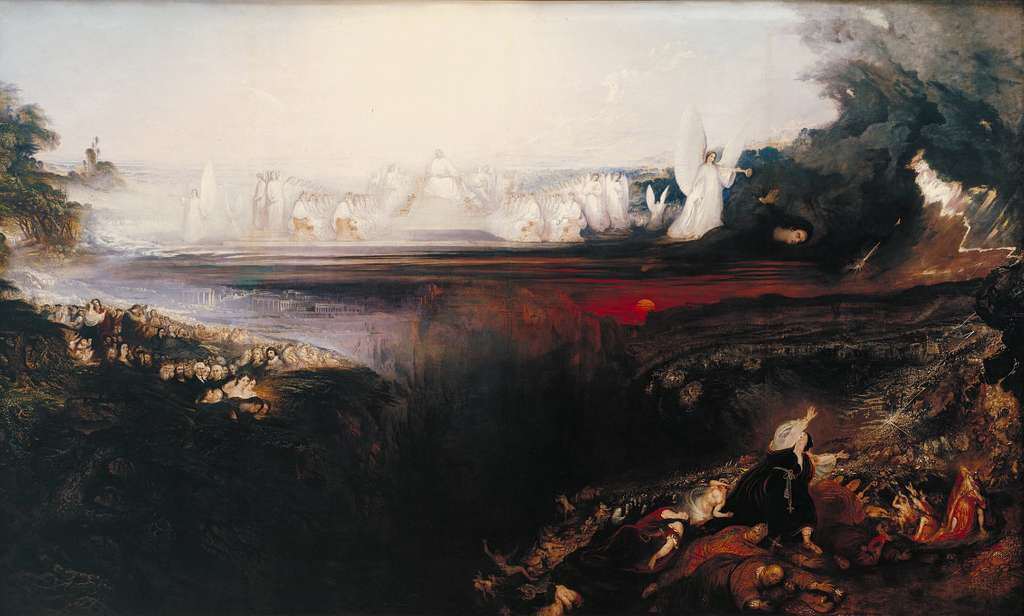
What does Advent have to do with Apocalypse?

Posted by: Alice L. Camille 🕔 Saturday 05, December 2015 Categories: Doctrines & Beliefs
 
John Martin Last Judgement Apocalyptic imagery

The Last Judgement by John Martin (Tate Britain via Picryl.com)

A perceptive liturgical question! For most of us, Advent is our happy place. We think of it as the prequel to Christmas, an elongated season of joy and warm human feeling toward people of good will. But Advent is not to be confused with Christmas cheer from the perspective of the church calendar, nor from the view of the solar calendar. December is literally a dark time, full of long nights and end-of-year regrets for many. What we have done or failed to do is scrawled in the dust of the eleven months behind us.

Advent was conceived in a cultural context where the promise of the sun's return with the winter solstice was still devoutly anticipated and celebrated. A tinge of anxiety invaded that waiting space. Longing for the light—well before the dream of electricity—was bigger than some of us can imagine. All of which fit in nicely with the construction of a church season that celebrates the return of Christ our Light. "Return" is the operative word here. Just as the sun comes back around at solstice time, Christians anticipate that Jesus Christ will come again.

Most of us aren't thinking about the Second Coming, the End of the World, Last Judgment, or Apocalypse Now as we decorate O Tannenbaum, admittedly. "The Last Things," as this set of ideas is theologically catalogued, is not what we're consciously waiting and longing for during December. When we set up the empty crèche in our parishes, we anticipate the arrival of a little baby in the straw, not the dissolution of all things. But when you think about it, isn't one the same as the other?

The Incarnation is the shattering belief that the eternal God entered the realm of time as one of us. This unprecedented event does dissolve business as usual in human history. It opens a door on one side of reality, just as the Resurrection leaves one open on the other side. Heaven—which is the realm that apocalyptic or hidden writing is most concerned with—has just stepped into time and made it possible for us to anticipate stepping beyond it ourselves. When we read the Book of Revelation, or Daniel, or gospel passages with apocalyptic themes, we awaken to the game-changing reality of our faith.

This is why the first two weeks of Advent each year are given over to Apocalypse. It really is the end of the world as we know it!

Books: A Time of Fulfillment: Spiritual Reflections for Advent and Christmas by Anselm Grün, OSB ( Collegeville, MN: Liturgical Press, 2013); Come, Lord Jesus: A Study of Revelation by Mark Braaten (Collegeville, MN: Liturgical Press, 2007) 


Reprinted with permission from PrepareTheWord.com. ©TrueQuest Communications.

Site:  0 comments  -  Add your own comment  -  Follow my posts  -  Permalink Tags: incarnationapocalypseadvent
Facebook:
Comments  

Petra is the coolest historical site in Jordan. Is it biblically significant?

Posted by: Jennifer Tomshack 🕔 Wednesday 21, October 2015 Categories: Church History
Petra, Jordan
Petra’s most famous ruin, Al Khazneh (“the Treasury”). The Hellenistic facade is carved into sandstone.
Of course Petra is cool—just ask Indiana Jones! The climactic scene in the 1989 film Indiana Jones and the Last Crusade—in which the main character goes on a quest for the Holy Grail (which is, according to legend, the cup used by Jesus at the Last Supper)—was filmed in Petra.
 
That in itself does not qualify it as a biblically significant site (sorry, Harrison Ford!). In fact, the ancient Nabataean city of Petra, located in the modern country of Jordan about 50 miles south of the Dead Sea, is not specifically named in the Bible—although it’s possible that Petra is mentioned in the Old Testament under other names, including Sela and Joktheel. But it was indisputably a significant trade center in the region during biblical times. Today, the stunningly dramatic archaeological site is one of the Seven Wonders of the World and a UNESCO World Heritage Site. It is Jordan’s most visited tourist attraction.
 
Enclosed by cliffs, Petra is accessed through a natural split in the rock, called the Siq (“shaft”), which winds for about a mile. At the end of this narrow crevice is Petra’s most famous ruin, Al Khazneh (“the Treasury”), whose Hellenistic facade is carved into the sandstone.
 
Petra is in what was once the land of the Edomites, who were descendants of Esau, the son of Isaac and Rebekah and the brother of Jacob. Moses and the Israelites passed near Petra, and it is believed that the spring at Wadi Musa (“Valley of Moses”), just outside Petra, is where Moses struck the rock and brought forth water. Moses’ brother Aaron was buried in Petra at Mount Hor, or Jabal Harun (“Mount Aaron”), where a Byzantine church and an Islamic shrine were built.
 
The Edomites were eventually supplanted by the Nabataeans. Petra flourished as the wealthy capital of the Nabataean kingdom from the 3rd century B.C. to the 2nd century A.D. The three kings who traveled to Bethlehem to honor the infant Jesus likely got their gifts in Petra, from which the Nabataeans controlled the Incense Route that connected the Mediterranean world with Eastern sources of incense, including Arabian frankincense and myrrh. One of the three kings is believed to have been Aretas, the Nabataean ruler of Petra.
 
The city was eventually abandoned by all but local tribes. Petra was unknown to the Western world for centuries, until it was visited by a European explorer in 1812.
 

Scripture: 2 Kings 14:7; Isaiah 16:1; Numbers 20:10-11; Matthew 2:1-12; 2 Corinthians 11:32


Reprinted with permission from PrepareTheWord.com. ©TrueQuest Communications.

Where is Moses buried?

Posted by: Jennifer Tomshack 🕔 Tuesday 20, October 2015 Categories: Scripture,Church History
Serpentine Cross on Mount Nebo in Jordan
The Serpentine Cross on Mount Nebo in Jordan.

According to the Book of Deuteronomy, Moses’ journey from Egypt to the Promised Land ended just short of him entering it—on Mount Nebo in what was then called Moab and what is today modern Jordan. The Israelites—so close to their final destination—camped “in the valley near Beth-peor” (Deuteronomy 3:29), a small lush area northeast of Mount Nebo that is known today as Ayun Musa (“Springs of Moses”).

God told Moses that he would not cross the Jordan with his people and commanded him to go to the top of Mount Nebo—which overlooks the Dead Sea, the Jordan River valley, and Jericho—to view the land of Israel. (Today, on a clear day, Jerusalem is visible from Mount Nebo’s promontory.) Moses died and was buried in the vicinity, but even at the time of the writing of Deuteronomy, the exact place of his tomb was unknown.

Joshua was anointed by Moses to be his successor. After Moses died, Joshua led the Israelites across the Jordan and into the Promised Land. The crossing point has been identified as the ford directly opposite Jericho known as Bethabara, or Beit ‘Abarah (“House of the Crossing”).

Centuries later, according to 2 Maccabees, just before the Babylonian invasion of Israel, Jeremiah hid the Ark of the Covenant (the chest containing the stone tablets on which the Ten Commandments were written) at Mount Nebo in a cave and sealed the entrance. The location of the lost Ark is, of course, a matter of great conjecture.

In the 4th century, Christians built a church at Mount Nebo that has been expanded into the large basilica there today, which houses a collection of Byzantine mosaics. Outside the sanctuary is the Serpentine Cross, which commemorates Christ’s crucifixion and the bronze serpent God instructed Moses to erect to stop a plague (all who looked upon the serpent were spared death).

Ancient Moab was the home of the Ammonites. Known as the Plains of Moab in the Old Testament and Peraea in the New Testament, it includes the lands east of the Jordan River and along the Dead Sea in the western part of modern Jordan, where today more than 100 biblical sites important to Jews and Christians have been identified and protected. Moab is where Jacob wrestled with an angel, where Lot’s wife was turned into a pillar of salt, where Job suffered and was rewarded for his faith, and where Elijah ascended to heaven. And it is where Jesus was baptized by John.

In the 20th century, American civil rights leader Martin Luther King, Jr. prophetically referenced Moses gazing from Mount Nebo at the Promised Land he would never reach in King’s last speech before he was assassinated. The speech is popularly called “I’ve Been to the Mountaintop.”

Scripture: Deuteronomy 3:27-29, 34:1-6; Joshua 1, 3; 2 Maccabees 2:4-8; Numbers 21:4-9; John 3:14


Reprinted with permission from PrepareTheWord.com. ©TrueQuest Communications.

Site:  0 comments  -  Add your own comment  -  Follow my posts  -  Permalink Tags: mosesjordan
Facebook:
Comments  

Settle an argument for me. Was Jesus baptized in Jordan?

Posted by: Jennifer Tomshack 🕔 Monday 19, October 2015 Categories: Sacraments,Church History
Pope Francis visited Bethany Beyond the Jordan in 2014.

Fittingly, there is quite a backstory to the location of Jesus’ baptism.

The Jordan River runs along the border between Jordan and Israel. (The width of the river, the distance between the two countries, is about 20 feet.) On the Jordan side of the Jordan River is a place called, then and now, Bethany Beyond the Jordan. There is strong biblical and archaeological evidence, as well as support from Byzantine and medieval texts, that this is where John the Baptist baptized Jesus of Nazareth in the river.

Bethany Beyond the Jordan has two distinct areas. The first is Tell Mar Elias (“Elijah’s Hill”), and the second is a cluster of remains of churches dedicated to Saint John the Baptist, a monastery, caves used by hermits, and baptismal pools. It has been a place of Christian pilgrimage for millennia.

According to 2 Kings, Elijah parted the waters of the Jordan River and crossed over, and then ascended to heaven on a chariot of fire, it is believed, at Tell Mar Elias.

Elijah and John the Baptist shared many similarities. Both were fiery men, who preached repentance and announced the coming of the Messiah. In fact, some believed John was Elijah, which John specifically denied. Still, it makes sense that John would conduct his ministry from a place associated with Elijah. Also, John’s preaching wasn’t popular with authorities and doing it on the other side of the river was probably more prudent.

When Jesus went to John for baptism, John initially objected, saying, “I need to be baptized by you, and yet you are coming to me?” (Matthew 3:14). But when Jesus insisted, John complied. And so began Jesus’ public ministry. He gathered his first disciples there: Peter, Andrew, Philip, and Nathanael. Multiple times, Jesus went to Jordan, and specifically Bethany Beyond the Jordan, where he taught and healed.

In keeping with the solemnity of the site, it has been restored to look much like it probably did 2,000 years ago. There are no signs marking the dirt path that leads to the rock and stone steps down to the water’s edge.

Bethany Beyond the Jordan is considered a national treasure by Jordanians. Its restoration and preservation is funded by the Jordanian government. John the Baptist is the patron saint of Jordan.

Pope John Paul II visited Bethany Beyond the Jordan during his 2000 pilgrimage to Jordan and the Holy Land, and it was designated as a Jubilee Year 2000 pilgrimage site by the Catholic Church, along with Mount Nebo, where Moses viewed the Promised Land before dying. Pope Francis visited Bethany Beyond the Jordan in 2014.

Scripture: 2 Kings 2; John 1:21, 28, 35-51, 10:40; Matthew 3:5-6, 13-17; Luke 3:21-22


Reprinted with permission from PrepareTheWord.com. ©TrueQuest Communications.

Is the clerical sexual abuse crisis over?

Posted by: Alice L. Camille 🕔 Wednesday 14, October 2015 Categories: Clergy
Church pews

Anyone who imagines the clerical sexual abuse of minors, explosively uncovered in the U.S. media in 2002, is a contained scandalous episode fading in the church's rearview mirror is mistaken. The facts speak for themselves: between 1950 and 2002, an emerging 10,667 victims accused 4,392 priests of sexual abuse. The numbers touched 4.2 percent of diocesan priests and 2.7 percent of religious order priests, including four percent in every region in this country. The time frame of 1970-1974 was the most volatile for abuse, as social factors contributing to it were rooted in the generation born between 1920 and 1949. This suggests that while the wave of abuse is receding, the most hard-hit generation of victims are currently in mid-life.

Children who suffered direct and shocking abuse aren't the only victims of this period. Their families, past and present, have shared this terrible anguish with them. And since the revelations have gone public, the Catholic community across the nation and around the world has been crushed by the shame, blame, and guilt of this horror. The loss of institutional credibility in the public eye is immense, but perhaps more significant is the enormous loss of faith that many Catholics themselves suffer in regard to their leadership, their church, and in some cases their God. This won't "blow over" as the media finds other headlines to pursue. What has rent the Body of Christ so violently and intimately must be healed.

The healing of this scandal involves tending to the direct victims of abuse with therapeutic care and just recompense. It also requires the identification, isolation, treatment, and/or incarceration of the clerical perpetrators (and in some cases, some visible penalty rendered to their enabling bishops) as the law allows. The genuine full confession and penitence of the institution that in many cases protected its priests and its reputation over and against its children is necessary. But all of these measures are only the beginning of the cure.

The final phase of the healing process will begin when the structures and attitudes that inadvertently fostered and then covered up such egregious behavior are addressed and undergo conversion, as we all do. As church historian Joseph Chinnici suggests, "operating relationships between the clerical and lay, male and female, celibate and married, elite and nonelite, sacred and secular dimensions of the church" must all come under review. Our willingness to do this reflects our genuine readiness to repent, and to restore what has been lost in this scandalized generation.

Websites: BishopAccountability.org, which since 2003 keeps documents related to the scandal

Books: When Values Collide: The Catholic Church, Sexual Abuse, and the Challenges of Leadership by Joseph Chinnici, OFM (Maryknoll, NY: Orbis, 2010)

Confronting Power and Sex in the Catholic Church: Reclaiming the Spirit of Jesus by Bishop Gregory Robinson, Donald Cozzins (Collegeville, MN: Liturgical Press, 2008)


Reprinted with permission from PrepareTheWord.com. ©TrueQuest Communications.

SOCIALIZE

Follow Us

CALENDAR

Click on a date below to see the vocation events happening that day!